Method
Prepare the ramekins and warm the cream
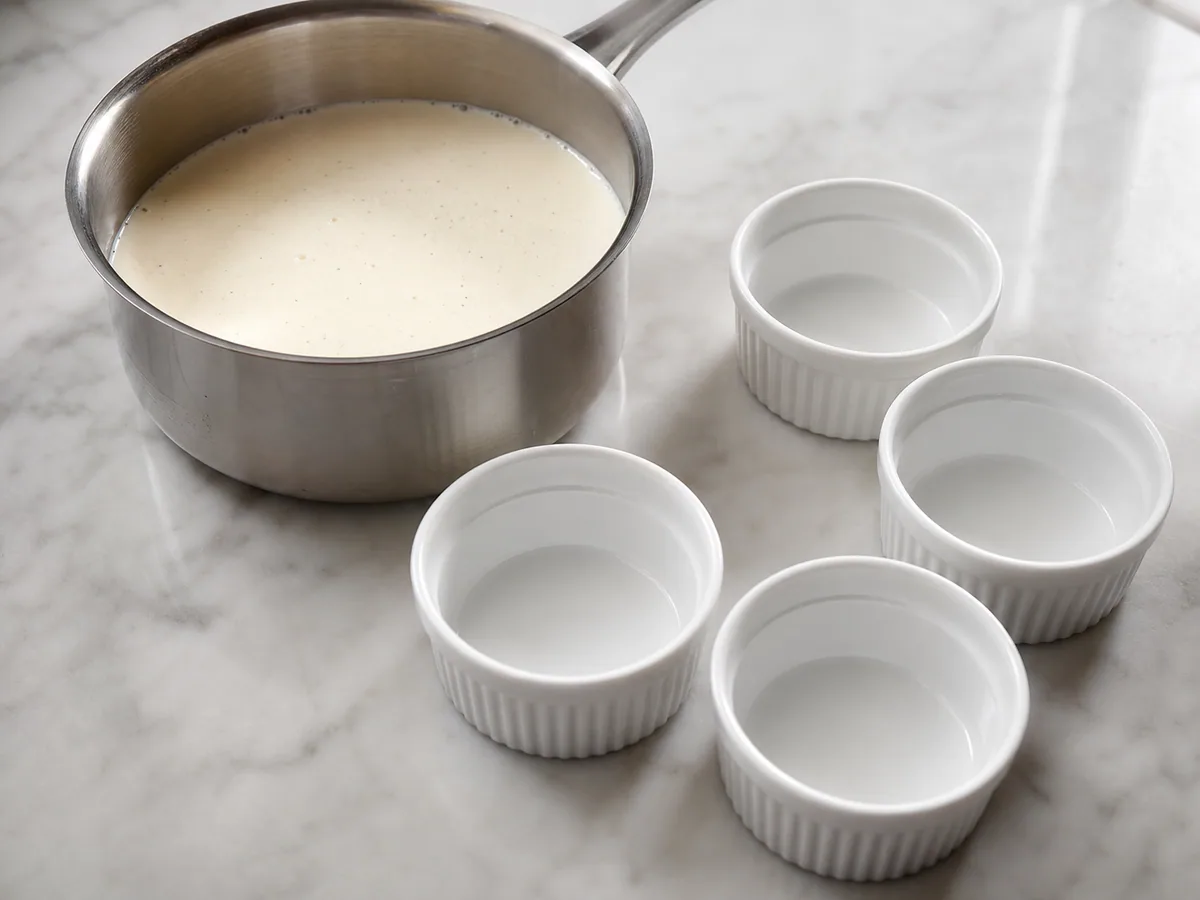
Heat the oven to 150°C (300°F). For the default 4-serving batch, arrange four shallow 150 ml (5 fl oz) ramekins (for 4 servings) in a deep roasting pan; scaled batches should use enough ramekins to preserve a similar custard depth. Split 1 vanilla bean lengthwise and scrape the seeds into a small saucepan. Add the pod and 360 ml of heavy cream. Warm over medium-low heat for 5 to 7 minutes, stirring occasionally, until steaming and ringed with tiny bubbles, but do not let it boil.
05:00Mix the custard base
Whisk 6 egg yolks, 70 g of granulated sugar for custard, and 1 g of fine sea salt in a heatproof bowl for 1 to 2 minutes, using a gentle circular motion rather than beating in air. Stop when the mixture is smooth, slightly lighter in color, and falls from the whisk in a thick ribbon.
01:00Temper, strain, and portion the custard
Set the bowl on a damp towel so it cannot slide. While whisking continuously, pour in a small stream of warm cream, then gradually add the rest. Pass the custard through a fine-mesh sieve into a jug and skim off surface foam. Divide it evenly among the ramekins. Carefully pour hot water into the roasting pan until it reaches halfway up the ramekin sides, taking care not to splash water into the custard.
Bake gently to a safe set
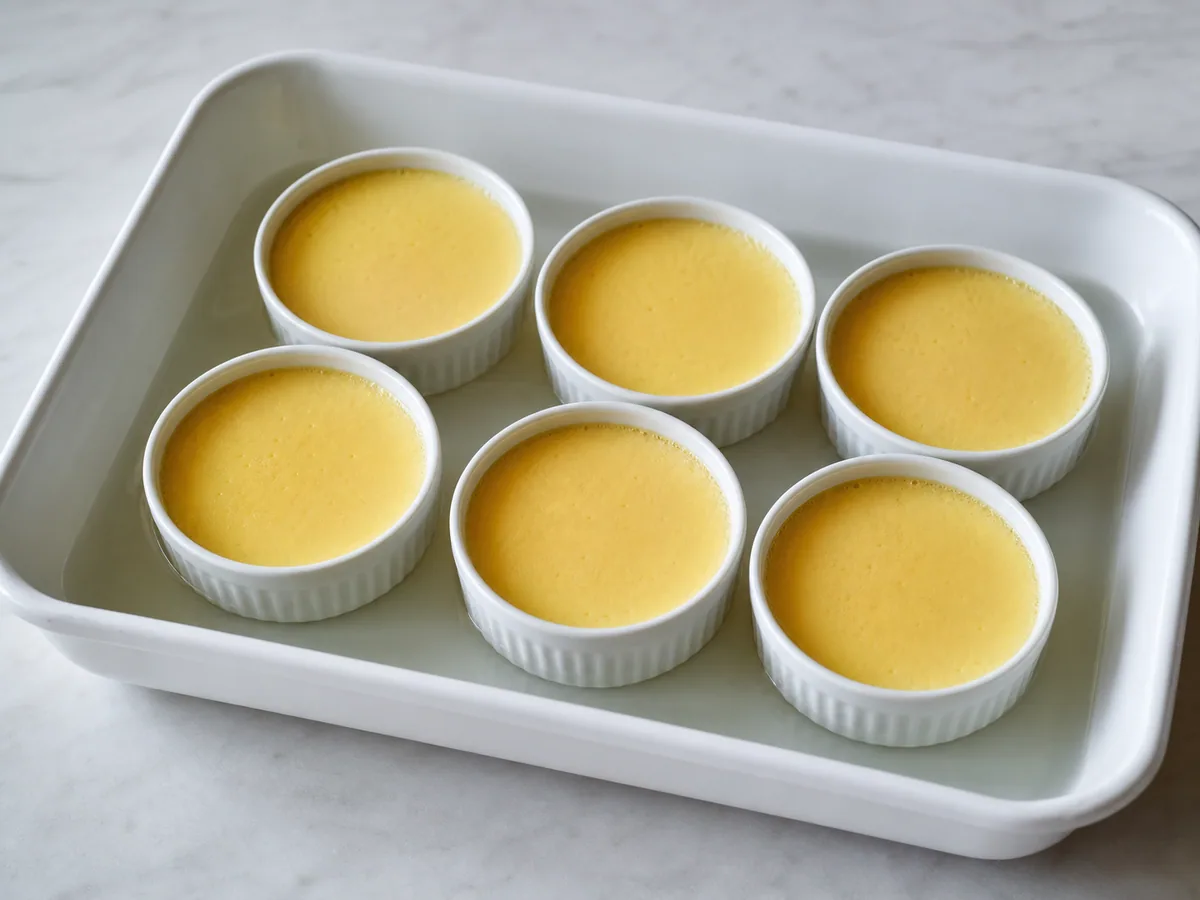
Bake for 28 to 35 minutes. Begin checking at 28 minutes: the edges should look set while the centers tremble as one soft mass when the pan is nudged. Check the center of a custard with an instant-read food thermometer and remove the pan as soon as it reaches 71°C to 74°C (160°F to 165°F). Set the roasting pan on a stable heatproof surface. Using a secure heatproof jar lifter or silicone-tipped locking tongs, grip each hot ramekin firmly at two opposite points, lift it straight from the water bath, and place it on a wire rack.
28:00Rest the baked custards
Let the hot ramekins stand undisturbed on the wire rack for 10 minutes. During this brief rest, keep them on a stable heatproof surface and leave the custard tops uncovered so steam can escape.
10:00Cool the custards in an ice bath
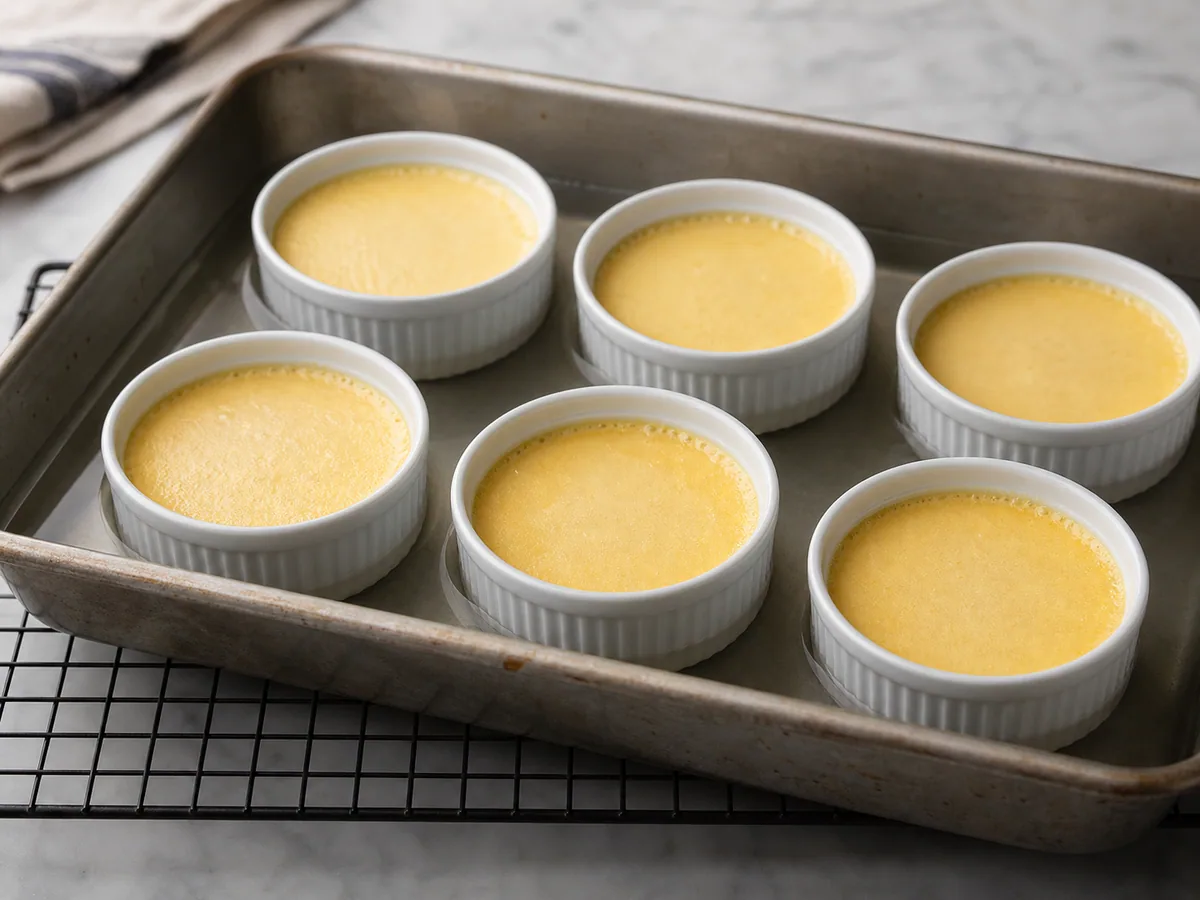
Fill a clean pan with cool tap water. Set the rested ramekins upright in the pan with the water safely below their rims, then add ice gradually around them to avoid sudden temperature shock. Cool for 30 minutes, until the ramekins feel cold rather than merely lukewarm and the custard centers look firm with only a slight unified jiggle, not a liquid wave. Remove the ramekins, dry their exteriors thoroughly, and lightly blot any moisture from the custard surfaces with clean paper towel.
30:00Caramelize the sugar and serve
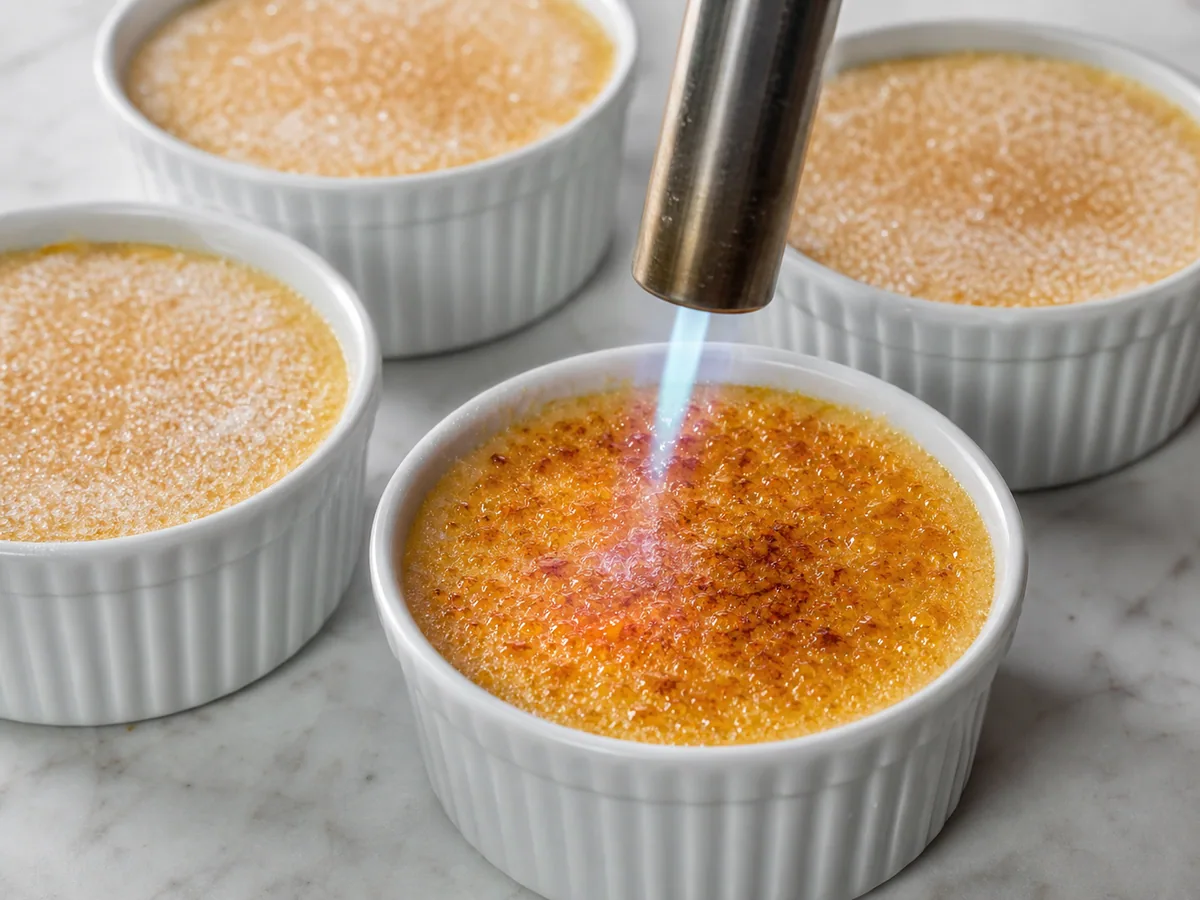
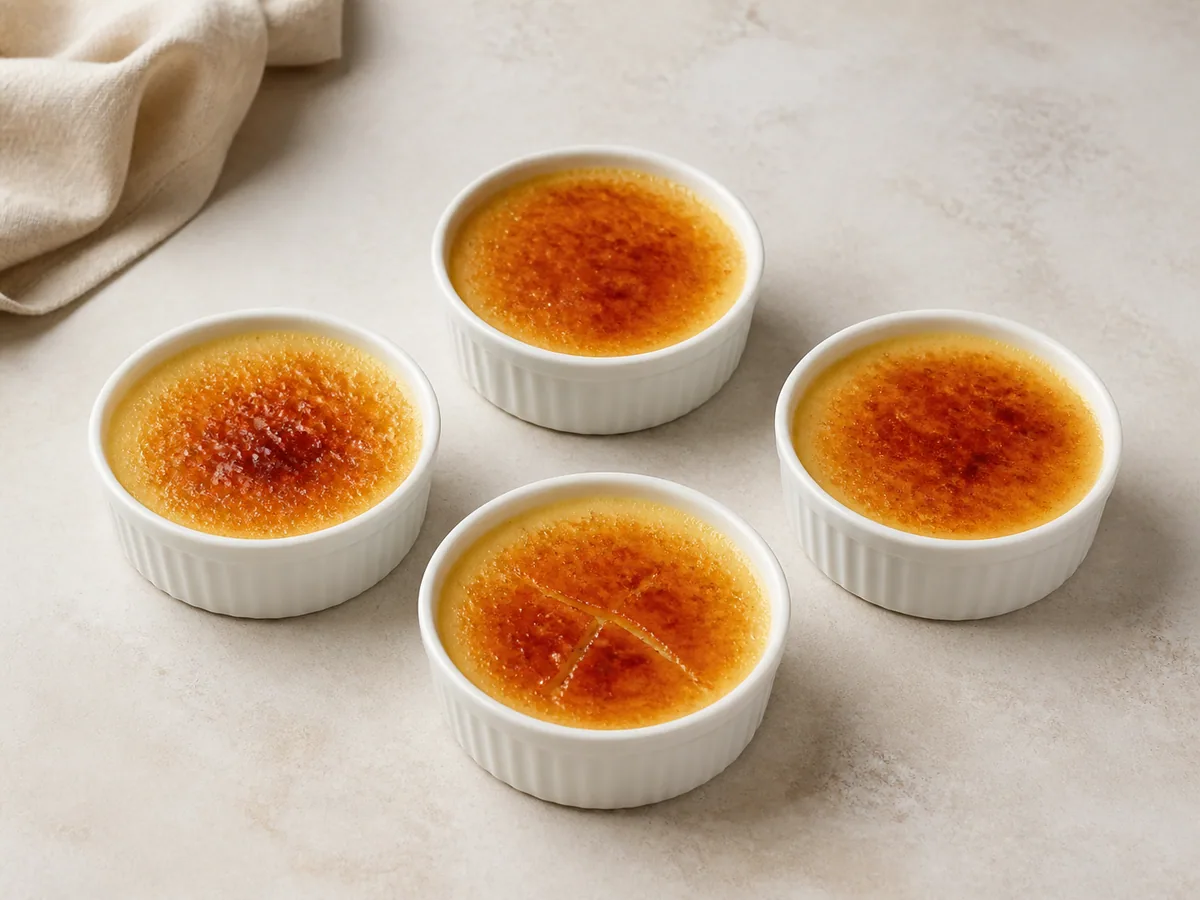
Place the ramekins on a dry, heatproof surface away from towels, paper, and other flammable items. Sprinkle 30 g of granulated sugar for topping in a thin, even layer across the custards. Hold a kitchen torch 5 to 8 cm (2 to 3 in) above the surface and move the flame steadily in small circles until the sugar melts, bubbles, and turns deep amber. Let the caramel stand for 2 minutes until hard, then serve immediately.
02:00


Smart Substitutions
- No vanilla bean? Use 2 teaspoons vanilla bean paste, or 2 teaspoons pure ground vanilla powder, and add it to the cream before warming.
- No kitchen torch? Use broiler-safe ramekins on a sturdy rimmed metal tray. Heat the broiler fully, set an oven rack 10 to 15 cm (4 to 6 in) below the element, and broil for about 1 to 3 minutes, watching continuously and rotating the tray as soon as the sugar begins to melt.
- Want a lighter custard? Replace up to one-quarter of the heavy cream with whole milk; the result will be less rich and slightly softer.
- Only superfine sugar available? Use it in the same amount for both the custard and topping; its small crystals melt especially evenly on top.
Tips and Variations
- Whisk gently throughout. Foam becomes bubbles on the baked surface and makes the sugar layer harder to spread evenly.
- Pour water into the roasting pan only after the filled ramekins are in place so the custard stays level and splash-free.
- Use a thin sugar coating. A heavy layer takes longer to melt and can overheat the custard before it becomes crisp.
What Went Wrong?
- Custard is grainy It became too hot. Keep the oven at 150°C (300°F), use the water bath, and remove the custards once the centers reach 71°C to 74°C (160°F to 165°F).
- Custard is still liquid It was removed too early or baked in ramekins that were too deep. Return it to the water bath and continue baking until a thermometer reaches at least 71°C (160°F).
- Sugar burns in spots Hold the torch slightly farther away and keep it moving. Stop at a deep amber color before the caramel turns black.
- Caramel topping stays soft Moisture blocked crisp caramelization. Blot the custard surface dry and apply a thinner, more even layer of sugar.
Nutrition Estimate
- Fiber: 0 g per serving
- Sodium: 145 mg per serving
Nutrition disclaimer:This recipe is provided for general cooking information only. Nutrition values are estimates and may vary by ingredients, brands, preparation methods, and serving sizes. Check ingredient labels and follow appropriate food-safety practices. This content is not medical, dietary, allergy, or professional food-safety advice.
FAQ
Found an error or have a suggestion?
Help us improve this recipe. Send us your feedback and include the recipe name so we can take a look.