Method
Heat the oven and prepare the starch
Heat the oven to 200°C (400°F) with racks in the upper and lower thirds. For the default 8-serving batch, line two rimmed baking sheets with parchment paper. Put 300 g of sour tapioca starch and 5 g of fine sea salt in a large heatproof bowl and whisk until evenly combined.
Scald the starch
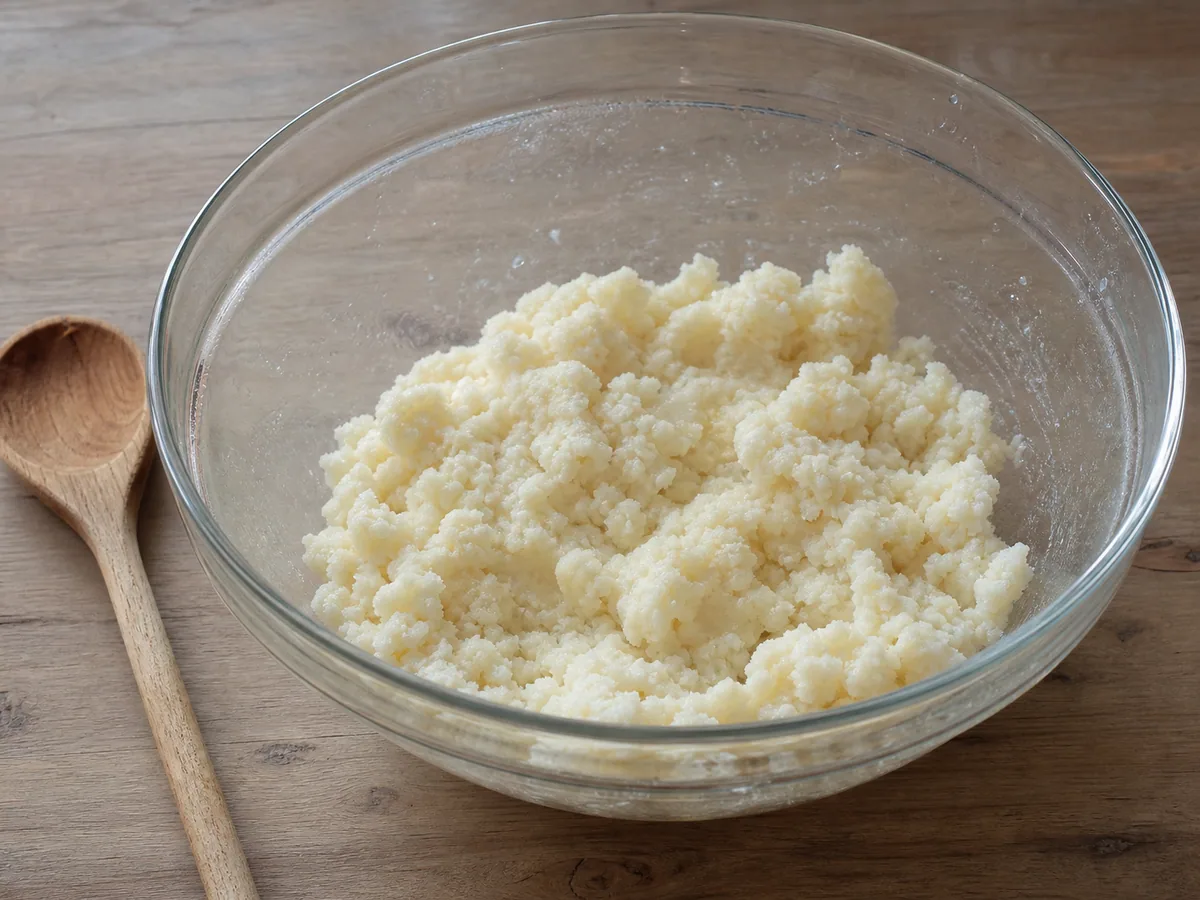
Combine 120 ml of whole milk, 120 ml of water, and 60 ml of neutral oil in a small saucepan. Bring to a full boil over medium-high heat, then immediately pour the bubbling liquid over the starch mixture. Stir firmly with a wooden spoon until no dry pockets remain; the mixture will look rough and crumbly. Let it stand for 10 minutes, until warm rather than hot to the touch.
10:00Add the eggs and cheese
Beat 2 large eggs in a small bowl. Add them to the warm dough in three additions, mixing vigorously after each one. The dough may look slippery at first; keep mixing until it becomes thick and sticky. Add 180 g of finely grated Minas meia-cura cheese and 40 g of finely grated parmesan cheese, then knead in the bowl for 2 to 3 minutes until the cheese is evenly distributed and the dough is tacky but able to hold a rounded shape.
02:00Shape the rolls
Moisten clean hands lightly with water. Divide the dough into three equal portions per serving, about 38 g (1 1/3 oz) each, and roll them into smooth balls about 4 cm (1 1/2 in) wide. Arrange them on the prepared sheets with about 5 cm (2 in) between pieces. If the dough clings heavily, rinse and remoisten your hands rather than adding a thick coating of starch. After shaping, wash your hands with hot, soapy water and clean any utensils and work surfaces that touched the raw egg dough before handling the oven, thermometer, or baked rolls.
Bake and rotate the sheets
Bake for 12 minutes, then rotate the baking sheets from top to bottom and front to back so the rolls brown and set evenly.
12:00Finish baking until puffed and set
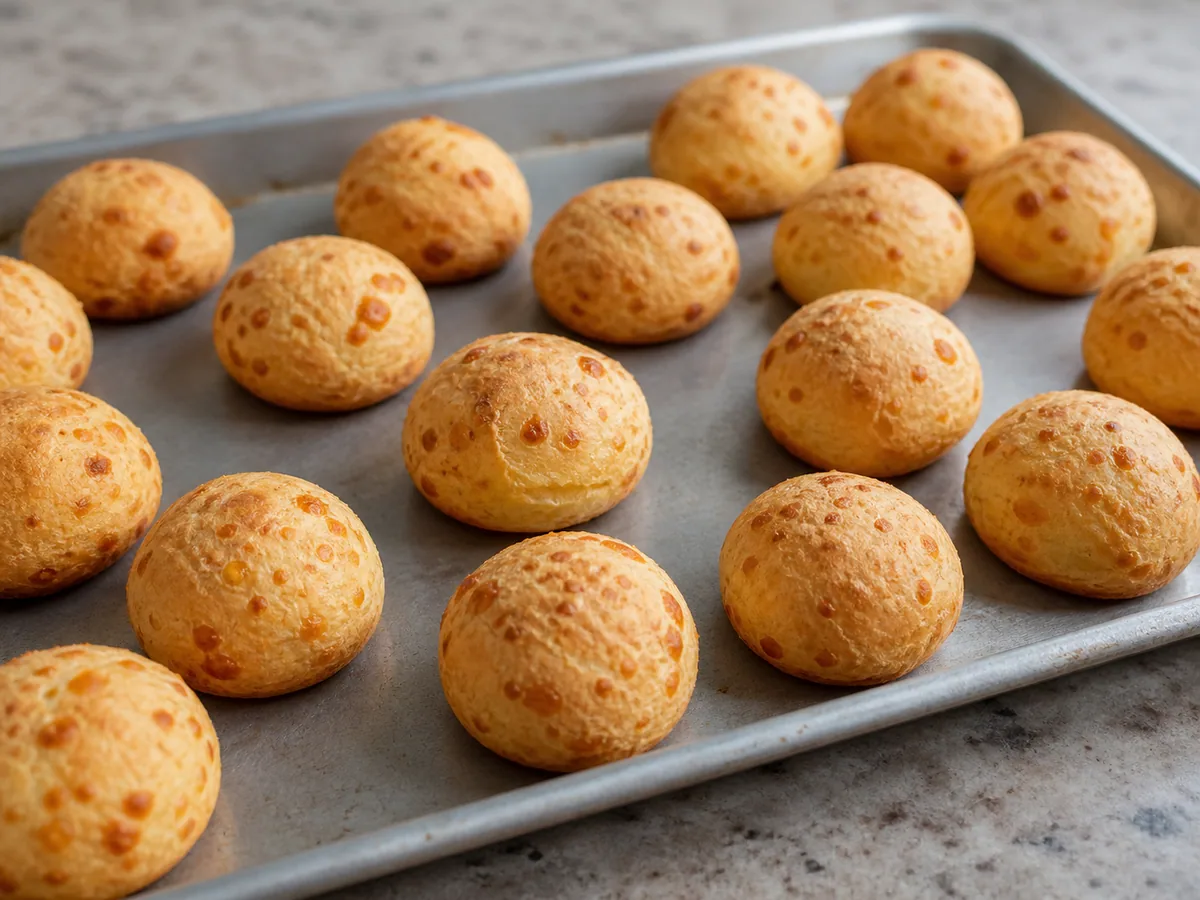
Continue baking for 8 to 13 minutes, starting the timer after rotating the sheets. Begin checking after 8 minutes. The rolls are ready when they are puffed, dry on the surface, and deep golden in scattered spots; a center roll should register at least 71°C (160°F) on a food thermometer so the egg-enriched dough is fully cooked.
08:00Settle the crumb and serve
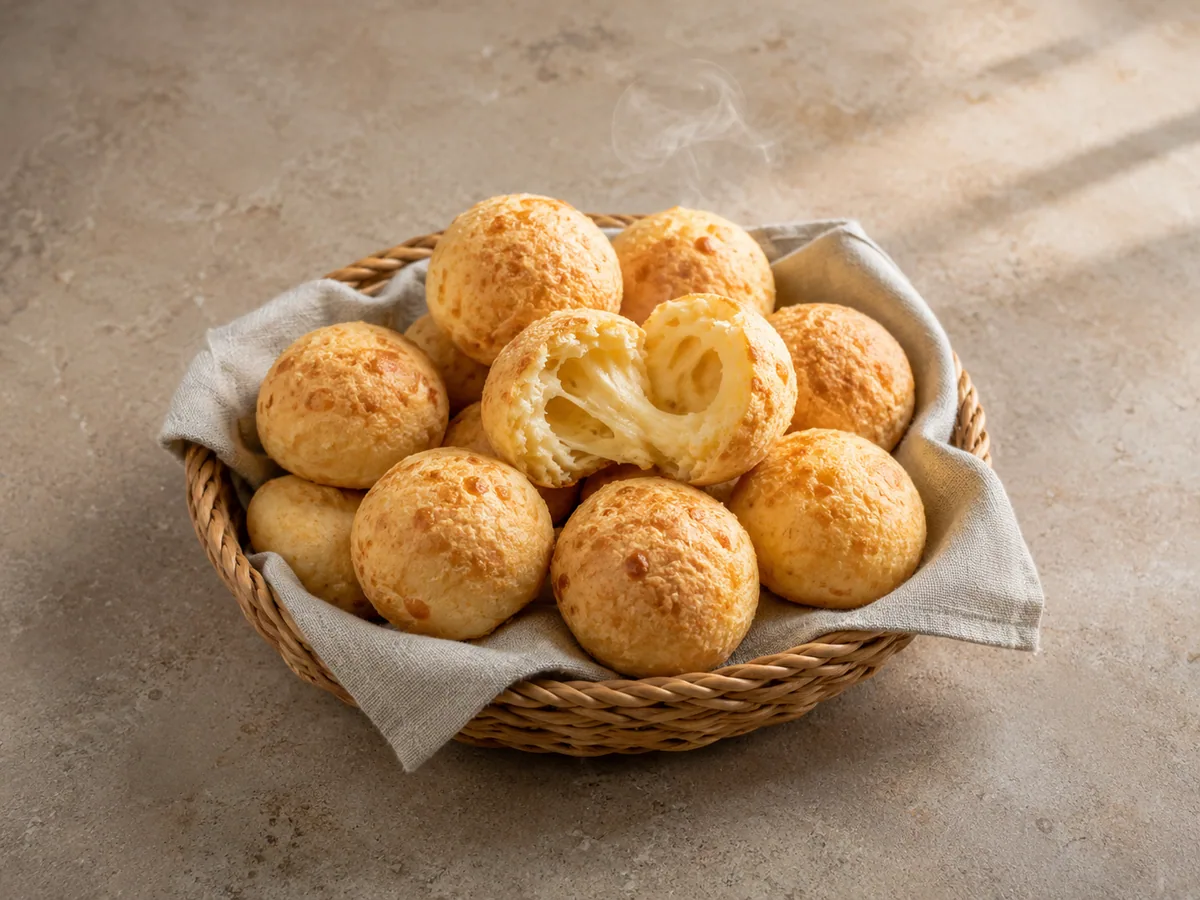
Leave the rolls on the baking sheets for 5 minutes. Serve while the shells are crisp and the centers are still warm and springy.
05:00


Smart Substitutions
- No Minas meia-cura? Use aged provolone or a firm, mildly tangy farmer's cheese.
- Only sweet tapioca starch? Use it in the same weight for a softer, less airy roll, or combine equal weights of sweet and sour tapioca starch for a balanced texture.
- No neutral oil? Use a mild olive oil that will not overwhelm the cheese.
- Prefer a sharper cheese flavor? Replace up to one-third of the Minas cheese with additional parmesan.
Tips and Variations
- Bring the milk mixture to an active boil before pouring; a lukewarm scald will not hydrate the starch as effectively.
- Add the beaten eggs gradually and mix past the slippery stage until the dough pulls together.
- Keep the portions small and evenly sized so the shells set before the centers become heavy.
What Went Wrong?
- Dough is too loose to shape Let it stand for 5 minutes, then try again with lightly moistened hands. If it still spreads, work in sour tapioca starch one spoonful at a time.
- Dough looks greasy and separated Keep mixing vigorously. The starch often needs another minute to absorb the egg and cheese fat and become cohesive.
- Rolls stay pale Continue baking in short intervals until the surfaces are dry and spotted golden, then verify that a center roll has reached at least 71°C/160°F.
- Centers are heavy or gummy Shape smaller portions, leave enough space between them, and bake until the shells are fully set rather than judging by color alone.
Nutrition Estimate
- Fiber: 0.3 g per serving
- Sodium: 545 mg per serving
Nutrition disclaimer:This recipe is provided for general cooking information only. Nutrition values are estimates and may vary by ingredients, brands, preparation methods, and serving sizes. Check ingredient labels and follow appropriate food-safety practices. This content is not medical, dietary, allergy, or professional food-safety advice.
FAQ
Found an error or have a suggestion?
Help us improve this recipe. Send us your feedback and include the recipe name so we can take a look.