Method
Heat the oven and prepare the ingredients
Heat the oven to 170°C (340°F). Cut 700 g of boneless lamb shoulder into 4 cm (1 1/2 in) pieces, trimming away only thick external fat. Peel 1000 g of floury potatoes and slice them evenly 3 mm (1/8 in) thick. Peel 400 g of yellow onions, halve them, and slice into thin half-moons. Pat the lamb pieces dry. Keep the board and knife used for raw lamb separate from the vegetables, then wash them and your hands thoroughly with hot soapy water.
Coat and brown the lamb
Combine 30 g of plain wheat flour, half of 3 g of kosher salt, and half of 1 g of black pepper in a wide bowl. Add 700 g of boneless lamb shoulder and turn until lightly coated. Heat 15 ml of neutral cooking oil in a heavy ovenproof casserole over medium-high heat. Brown the lamb in 2 or 3 batches for 8 to 10 minutes total, turning until the pieces have a deep brown crust; begin checking at 8 minutes. Transfer each batch to a clean plate. Discard any flour left in the bowl, then wash the bowl and utensils that touched raw lamb before reusing them.
08:00Soften the onions and build the gravy
Lower the heat to medium. Add 400 g of yellow onions to the casserole and cook for about 8 minutes, stirring often, until softened and lightly golden. Pour in 600 ml of low-sodium lamb or beef stock, scraping the browned residue from the base. Add 4 sprigs of fresh thyme, 1 bay leaf, the remaining 3 g of kosher salt, and the remaining 1 g of black pepper. Return the browned lamb and any juices from the clean plate. Bring the liquid to a gentle simmer, then remove the casserole from the heat.
08:00Build the potato lid
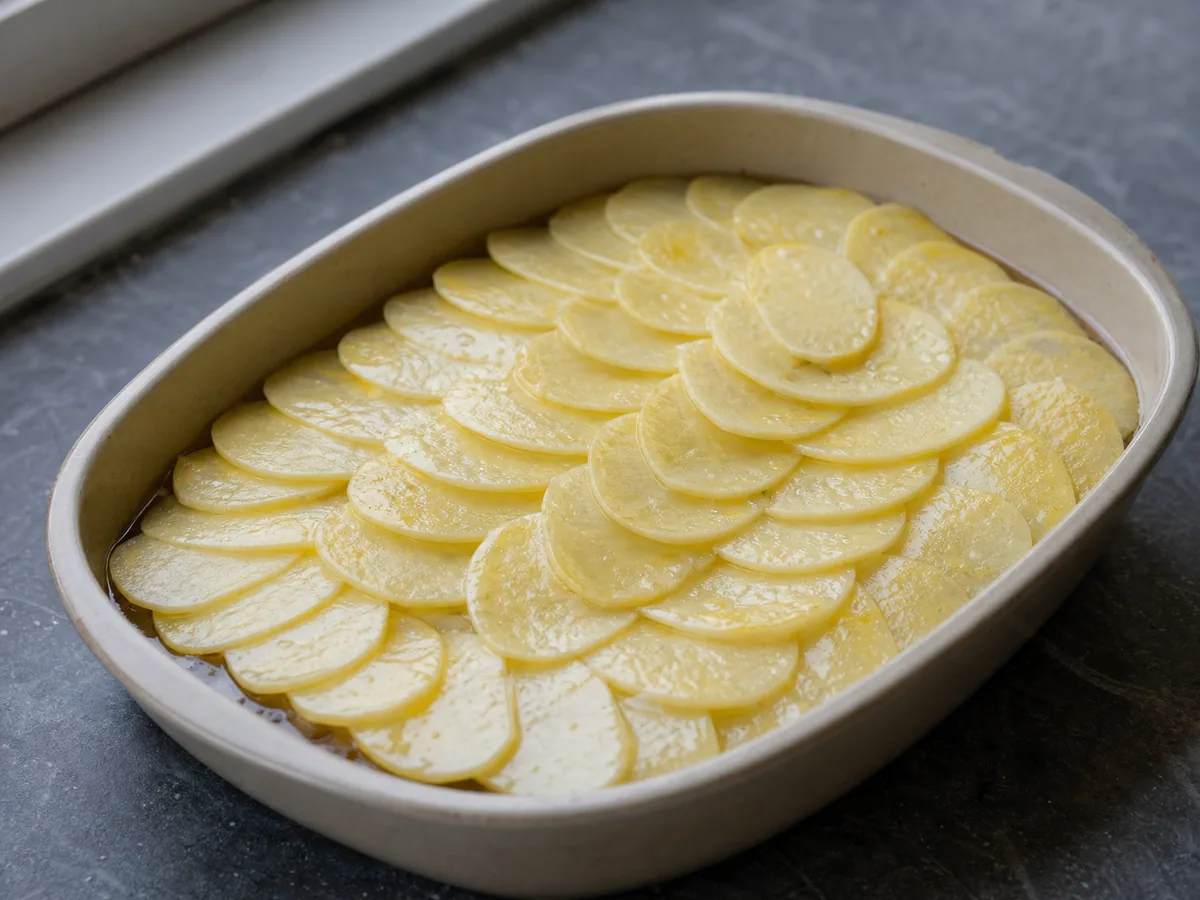
Melt 28 g of unsalted butter. Arrange 1000 g of floury potatoes over the lamb in two closely overlapping layers, starting around the outside and working toward the center. Brush the first layer lightly with butter, then arrange the final layer neatly and brush with the remaining butter. Press gently so the lower slices just meet the gravy, while the upper surface stays above the liquid. Use a casserole large enough to keep the filling in a deep, even layer; scaled batches need a vessel that preserves a similar depth rather than a linearly scaled diameter.
Slow-bake until the lamb is tender
Cover the casserole tightly and bake at 170°C (340°F) for 1 hour 40 minutes. The gravy should bubble quietly around the edges and the lower potato slices should become tender. If the lid does not seal well, place a sheet of foil over the casserole before fitting the lid so steam cannot escape too quickly.
1:40:00Brown the potato lid and check doneness
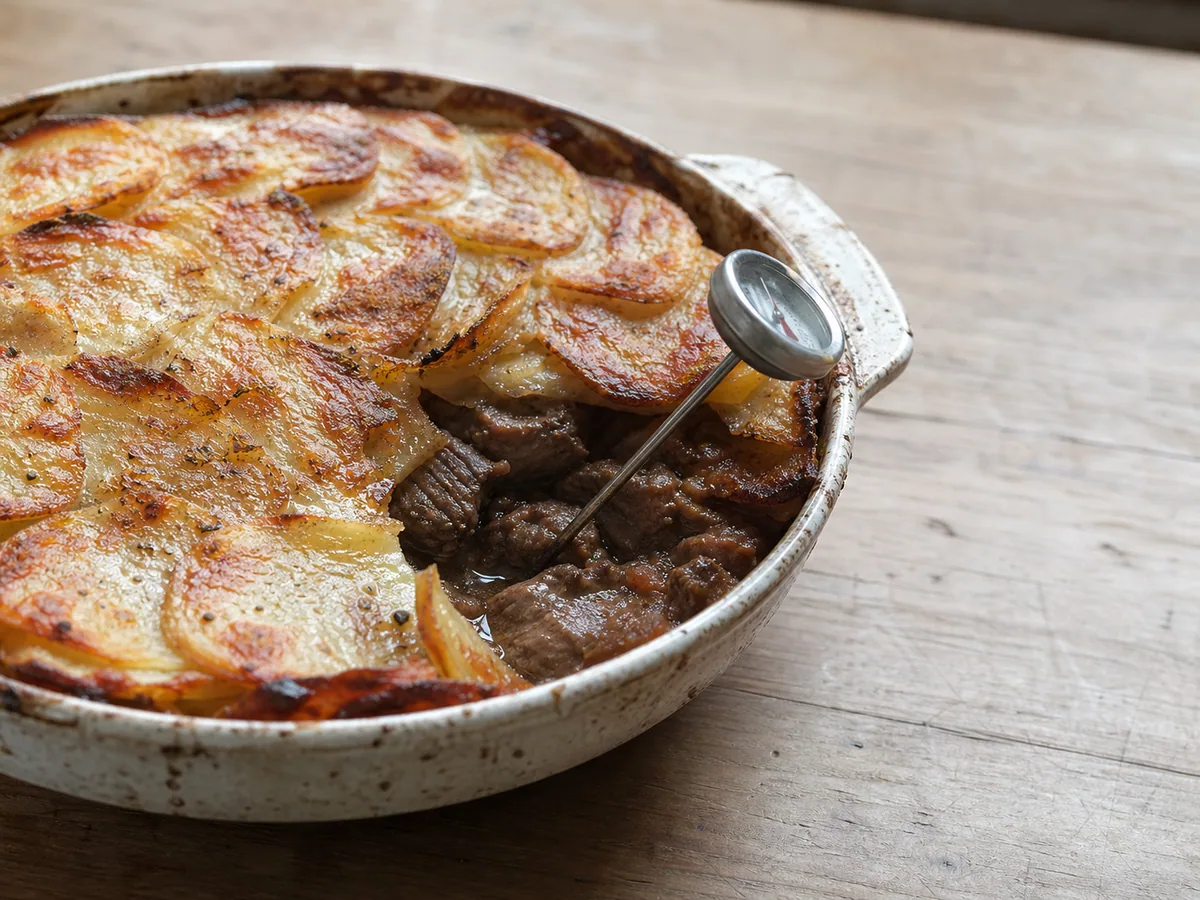
Remove the lid and increase the oven to 200°C (400°F). Bake for 30 to 40 minutes, beginning the first check at 30 minutes, until the potato surface is deeply golden and crisp at the raised edges. Insert a food thermometer into the largest lamb piece through a small gap near the edge; it must register at least 63°C/145°F. The lamb should also yield easily to a fork. If the meat is still firm or the potatoes resist a knife, cover loosely and continue baking in 15-minute intervals before checking again.
30:00Rest and serve
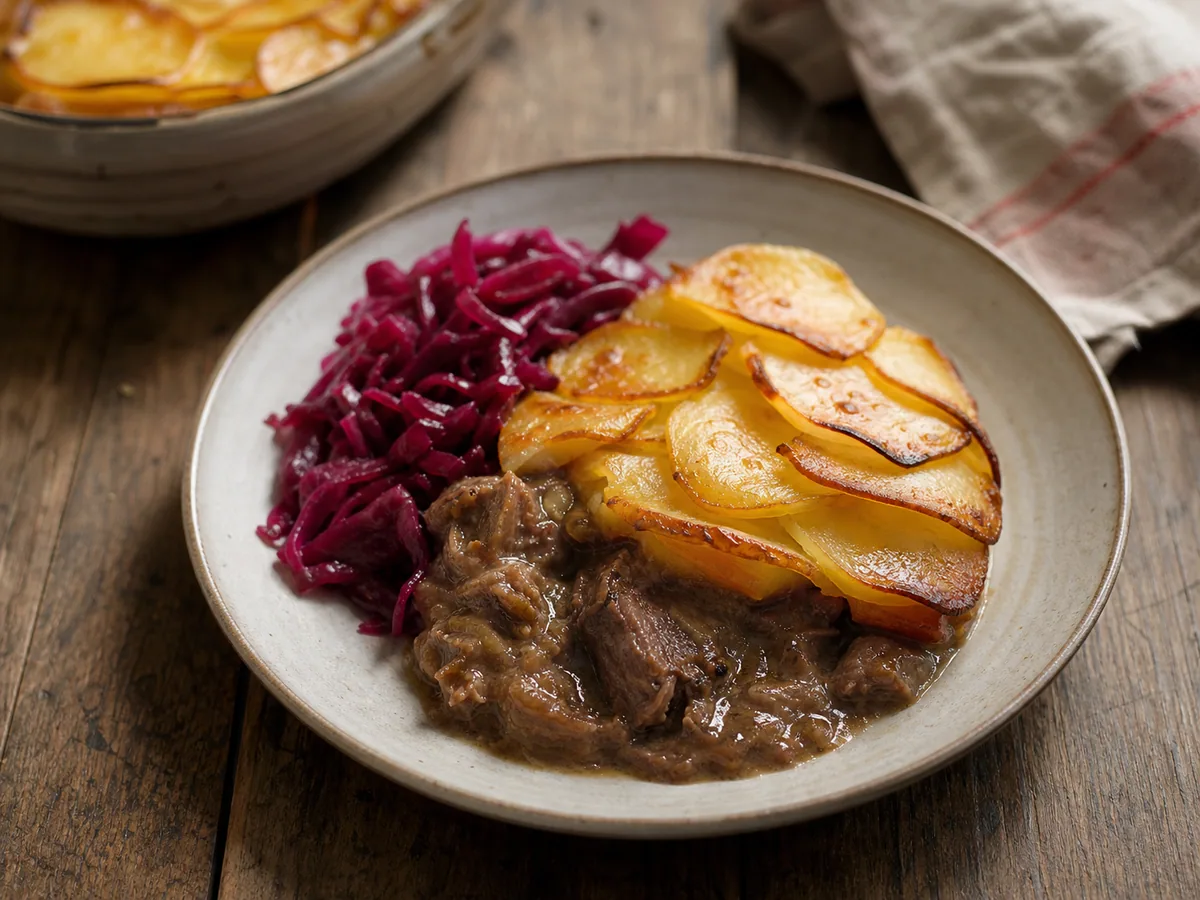
Let the hotpot stand uncovered for 10 minutes, which comfortably exceeds the required 3-minute rest after the lamb reaches its safe temperature. Remove the thyme stems and bay leaf. Spoon it into warm bowls so each serving includes tender lamb, onion gravy, and an intact section of potato lid. Serve with pickled red cabbage (optional).
10:00


Smart Substitutions
- No lamb shoulder? Use boneless lamb neck for an equally rich braise, or trimmed lamb leg for a leaner result; cook until fork-tender and verify the same safe temperature.
- No lamb stock? Low-sodium beef stock gives the closest depth while keeping the gravy balanced and savory.
- No floury potatoes? Use Russet or another high-starch potato. Waxy potatoes hold their shape but will not absorb the gravy as readily.
- Prefer no butter? Brush the potato layers with olive oil instead; the top will still brown, with a slightly less rounded flavor.
Tips and Variations
- Slice the potatoes as evenly as possible so the lower layer softens before the top becomes too dark.
- Brown the lamb in batches and leave space between pieces; a crowded pan traps steam and weakens the gravy base.
- Arrange the final potato layer neatly because it becomes the visible crust when the casserole reaches the table.
What Went Wrong?
- Potato top is pale Move the uncovered casserole higher in the oven for the last few minutes, watching closely until the raised edges turn golden.
- Lamb is still firm Cover loosely and continue baking in 15-minute intervals. Shoulder needs time as well as heat to become fork-tender.
- Potatoes are firm underneath Cover the casserole again so trapped steam can finish softening them, then uncover briefly to restore the crisp surface.
- Gravy is too thin Let the uncovered hotpot bake for another 10 minutes so the liquid reduces, then allow the full standing time before serving.
Nutrition Estimate
- Fiber: 7 g per serving
- Sodium: 760 mg per serving
Nutrition disclaimer:This recipe is provided for general cooking information only. Nutrition values are estimates and may vary by ingredients, brands, preparation methods, and serving sizes. Check ingredient labels and follow appropriate food-safety practices. This content is not medical, dietary, allergy, or professional food-safety advice.
FAQ
Found an error or have a suggestion?
Help us improve this recipe. Send us your feedback and include the recipe name so we can take a look.