Method
Caramelize the onions
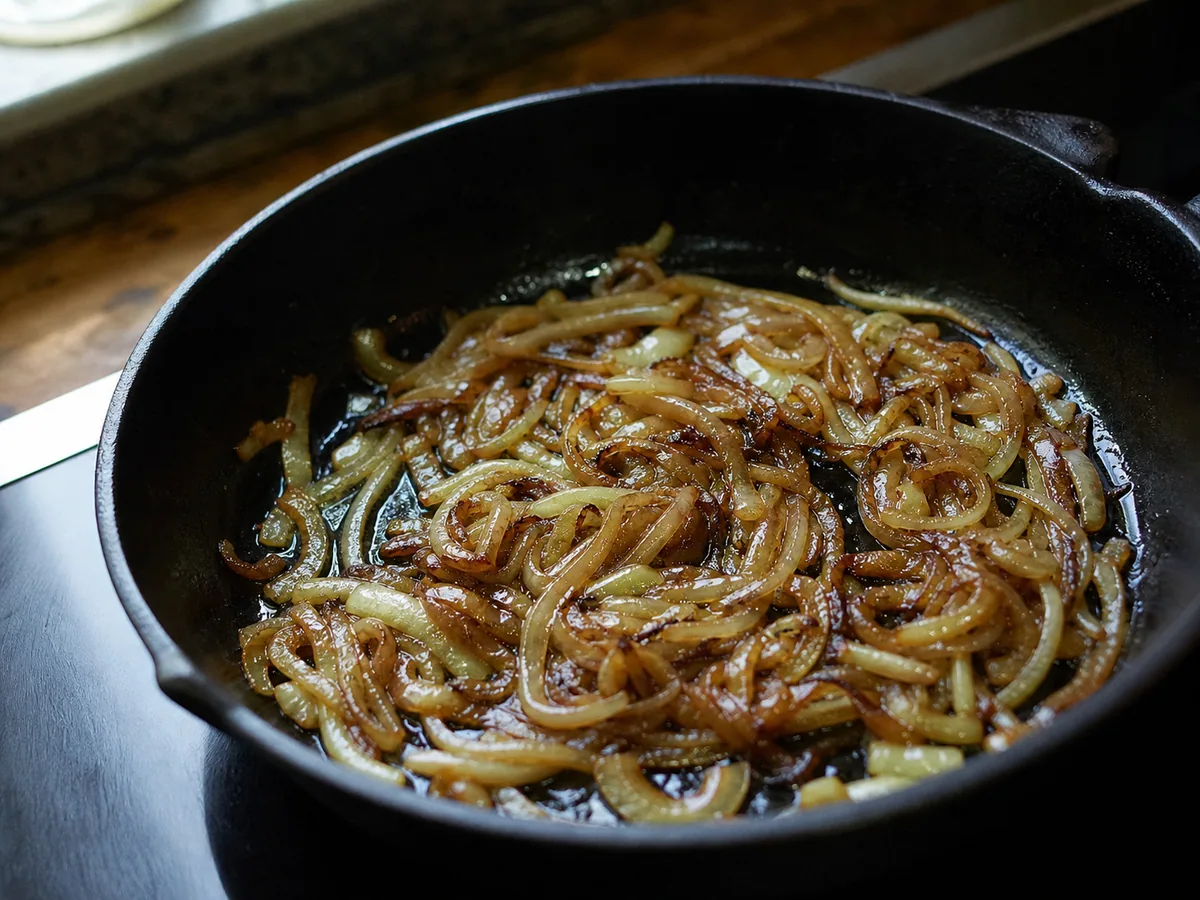
Slice 300 g of yellow onions into thin half-moons. Melt 35 g of unsalted butter for onions in a wide skillet over medium heat, add 300 g of yellow onions, and stir until evenly coated. Reduce the heat to medium-low and cook, stirring every few minutes, until the onions are soft and amber at the edges. Sprinkle in 5 g of granulated sugar and continue cooking until deeply golden, about 20 to 25 minutes total; set the timer for 20 minutes as the first doneness check. Transfer the onions to a plate and keep the skillet for finishing the noodles.
20:00Beat the spätzle batter
Whisk 4 large eggs with 120 ml of whole milk, 4 g of fine salt, and 1/2 g of ground nutmeg in a large bowl. Add 300 g of all-purpose flour and beat vigorously with a sturdy wooden spoon for 3 to 4 minutes, scraping the bowl as needed, until the batter is glossy, elastic, and dotted with small air bubbles. It should fall from the spoon in a thick ribbon rather than pour like pancake batter. Do not taste the raw batter, and keep the batter and flour dust away from the grated cheeses and chives. Wash your hands, bowl, whisk, wooden spoon, and any utensils or work surfaces that touched the raw eggs or flour with hot, soapy water before continuing.
03:00Rest the batter and prepare the cheese
Let the batter stand for 10 minutes so the flour hydrates. Meanwhile, grate 140 g of Emmental cheese and 110 g of aged mountain cheese into a bowl and toss them together. Bring a large pot of water to a rolling boil.
10:00Cook the spätzle in batches
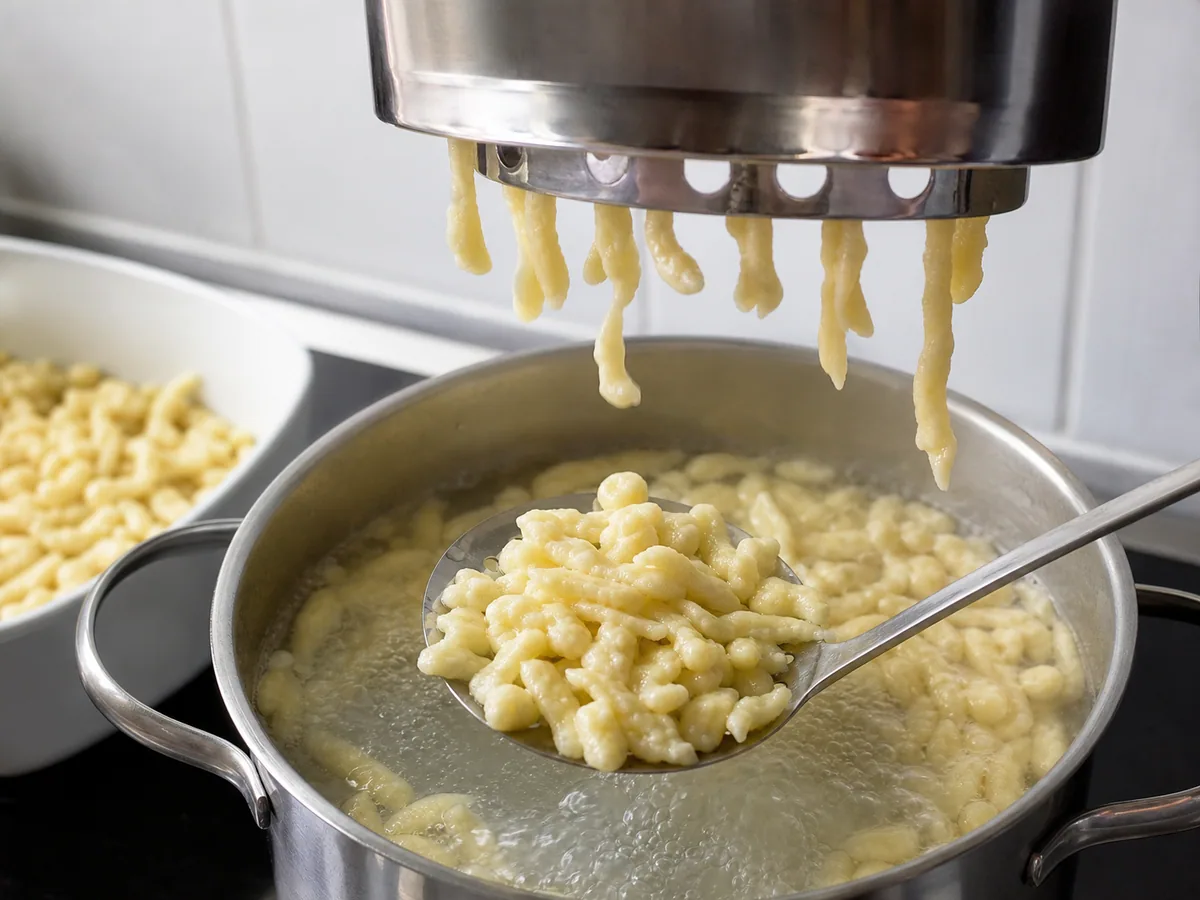
Set a spätzle maker or sturdy large-holed colander over the boiling water. Work in small batches so the pot keeps boiling, pressing the batter through the openings and separating any long strands with the edge of a scraper. Stir once immediately. When the noodles rise, keep them at a lively simmer for 2 minutes, then lift them out with a slotted spoon. Cut one open to confirm the center is fully set with no wet batter; for an additional safety check, a gathered sample should reach 71°C/160°F on an instant-read thermometer. Transfer each cooked batch to a clean bowl. Before removing the final batch, reserve 120 ml of reserved spätzle cooking water.
02:00Coat the noodles with cheese
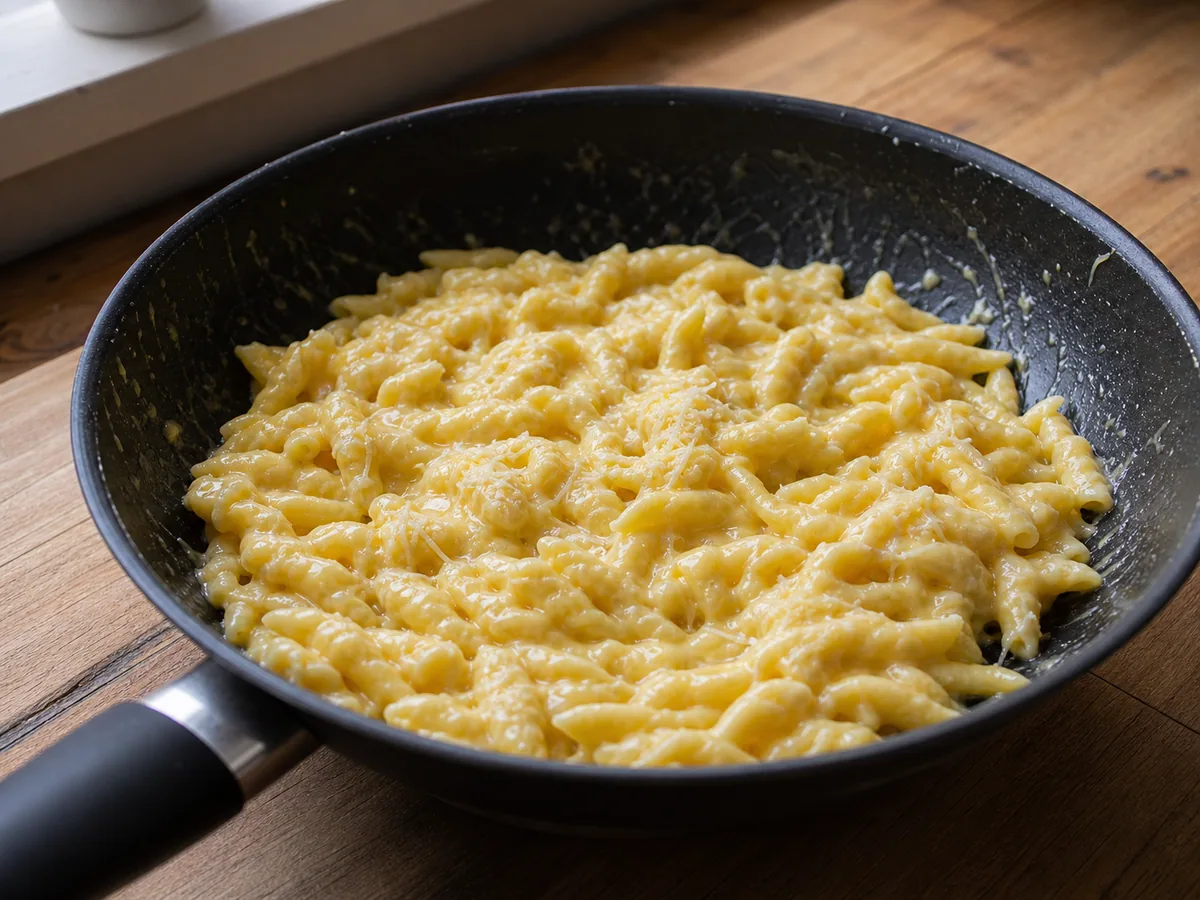
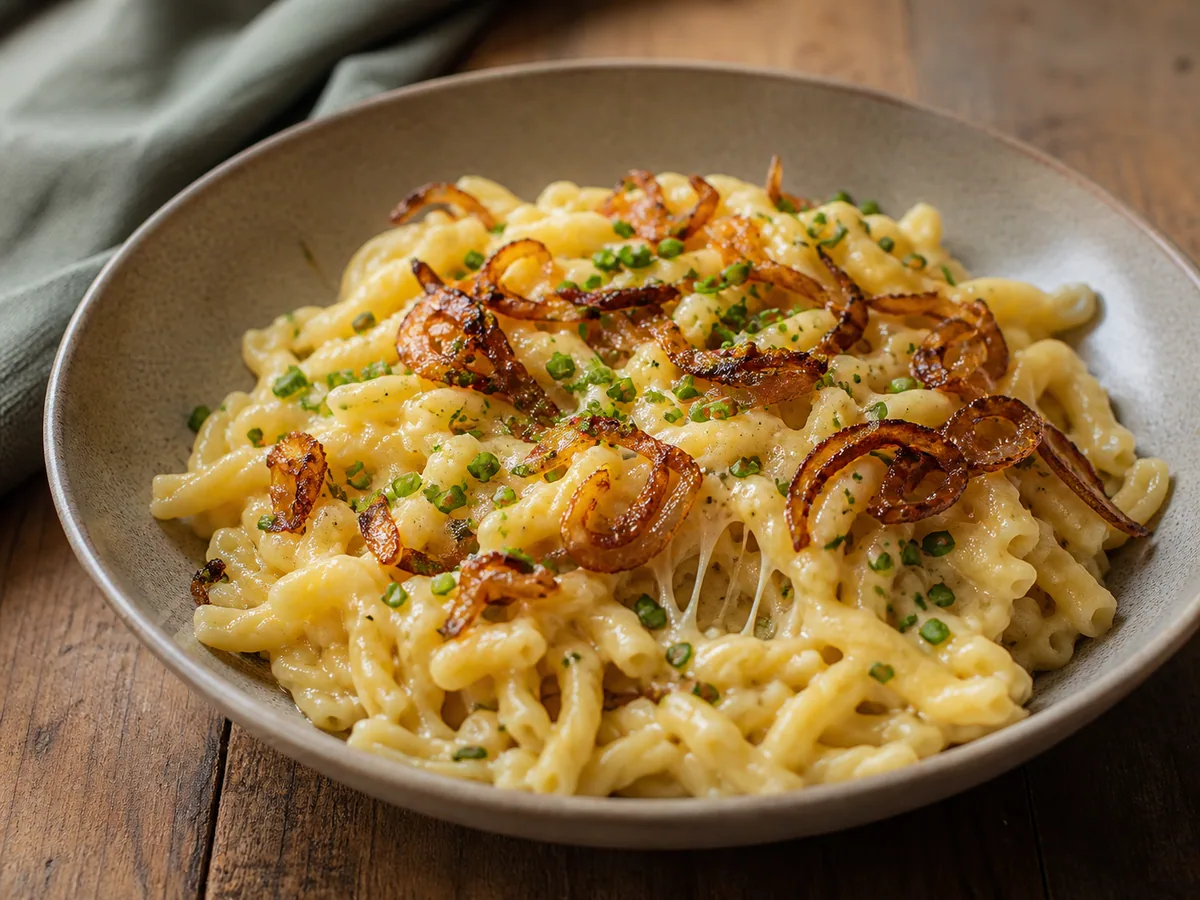
Return the reserved skillet to medium-low heat and melt 15 g of unsalted butter for noodles. Add the cooked spätzle and toss until hot and lightly coated. Reduce the heat to low, scatter in 140 g of Emmental cheese and 110 g of aged mountain cheese, and toss steadily. Add 120 ml of reserved spätzle cooking water a splash at a time until the cheeses melt into a smooth, glossy coating instead of clumping or releasing oil. Stir in 1 g of black pepper and remove the skillet from the heat as soon as the cheese is fully melted, about 3 to 5 minutes; check at 3 minutes.
03:00Finish with onions and chives
Finely chop 10 g of fresh chives. Spoon the cheese-coated spätzle into warm shallow bowls, pile the caramelized onions over the top, and scatter with 10 g of fresh chives. Serve immediately while the cheese is supple and the onion edges still have a little bite.


Smart Substitutions
- No spätzle maker? Press the batter through a sturdy colander with large round holes, working over the pot in small batches.
- No aged mountain cheese? Use Gruyère or Comté for a similarly nutty, savory finish.
- Prefer a milder cheese blend? Increase the Emmental and reduce the aged mountain cheese by the same weight.
- No fresh chives? Use flat-leaf parsley for a clean herbal finish.
Tips and Variations
- Use the widest skillet you have for the onions so moisture escapes and the slices brown rather than steam.
- Keep the water at a steady boil between batches; overcrowding makes the spätzle stick together.
- Lower the heat before adding cheese. Gentle heat and cooking water produce a silky coating without greasiness.
What Went Wrong?
- Batter will not pass through the maker Beat in a small splash of milk until it drops in a thick ribbon.
- Spätzle dissolve or turn ragged The batter is too loose. Beat in a little flour and let it stand briefly before trying another batch.
- Cheese turns oily Move the skillet off the heat and toss in a splash of hot cooking water until the coating comes back together.
- Onions brown unevenly Lower the heat, spread them across the skillet, and stir more often near the end of cooking.
Nutrition Estimate
- Fiber: 3 g per serving
- Sodium: 750 mg per serving
Nutrition disclaimer:This recipe is provided for general cooking information only. Nutrition values are estimates and may vary by ingredients, brands, preparation methods, and serving sizes. Check ingredient labels and follow appropriate food-safety practices. This content is not medical, dietary, allergy, or professional food-safety advice.
FAQ
Found an error or have a suggestion?
Help us improve this recipe. Send us your feedback and include the recipe name so we can take a look.