Method
Prepare the cactus and vegetables
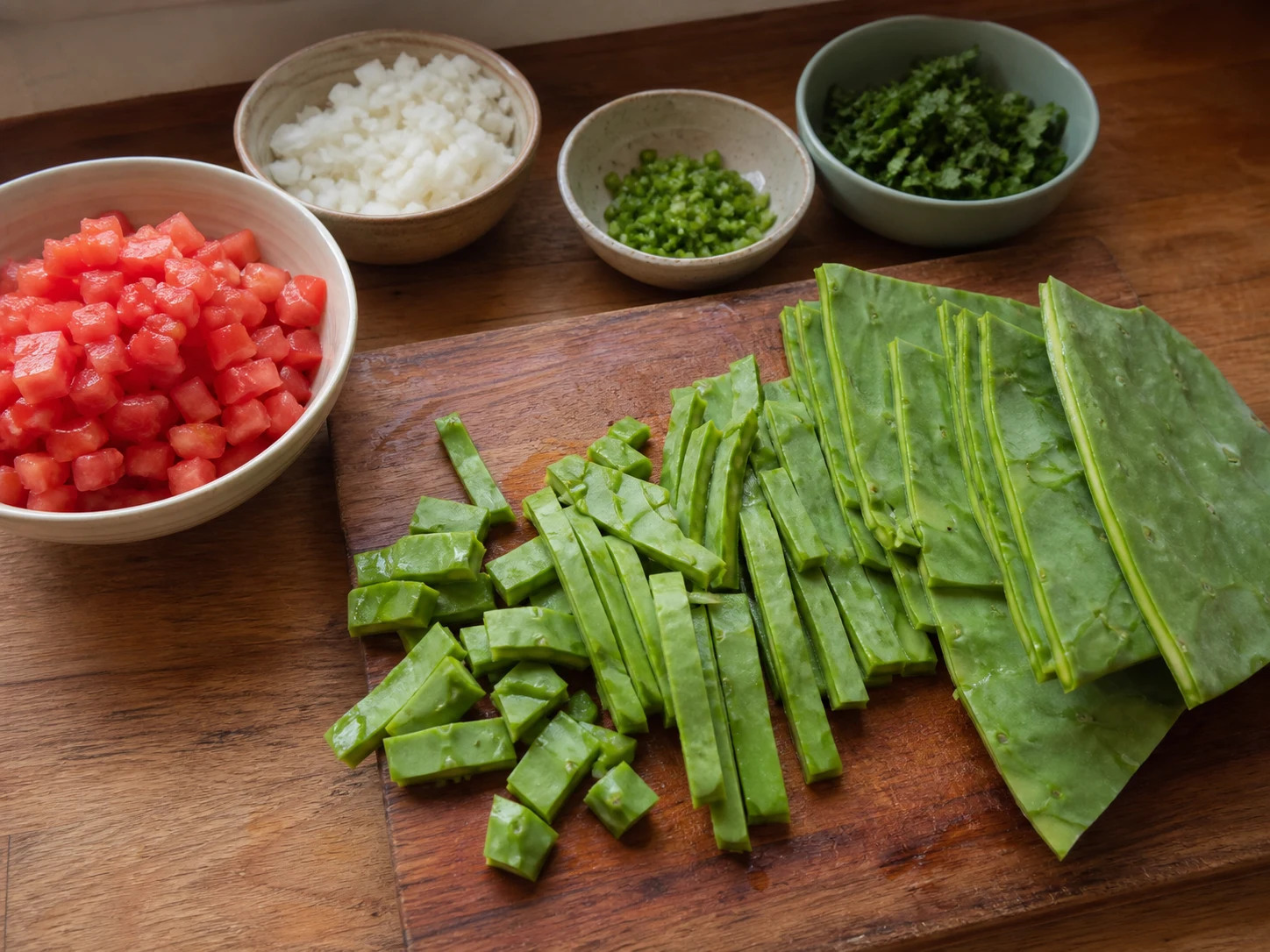
Buy cactus paddles that have already been cleaned, then inspect 600 g of fresh cactus paddles under good light and scrape away any remaining spines or rough eyes with a small knife while holding each paddle with kitchen tongs. Rinse well. Cut the paddles into 1 cm (3/8 in) strips, then cut the strips into bite-size pieces. Dice 300 g of ripe tomatoes. Chop 90 g of white onion finely. Mince 1 serrano chile, removing the seeds first for gentler heat. Chop 20 g of fresh cilantro and keep each prepared ingredient separate.
Simmer the nopales
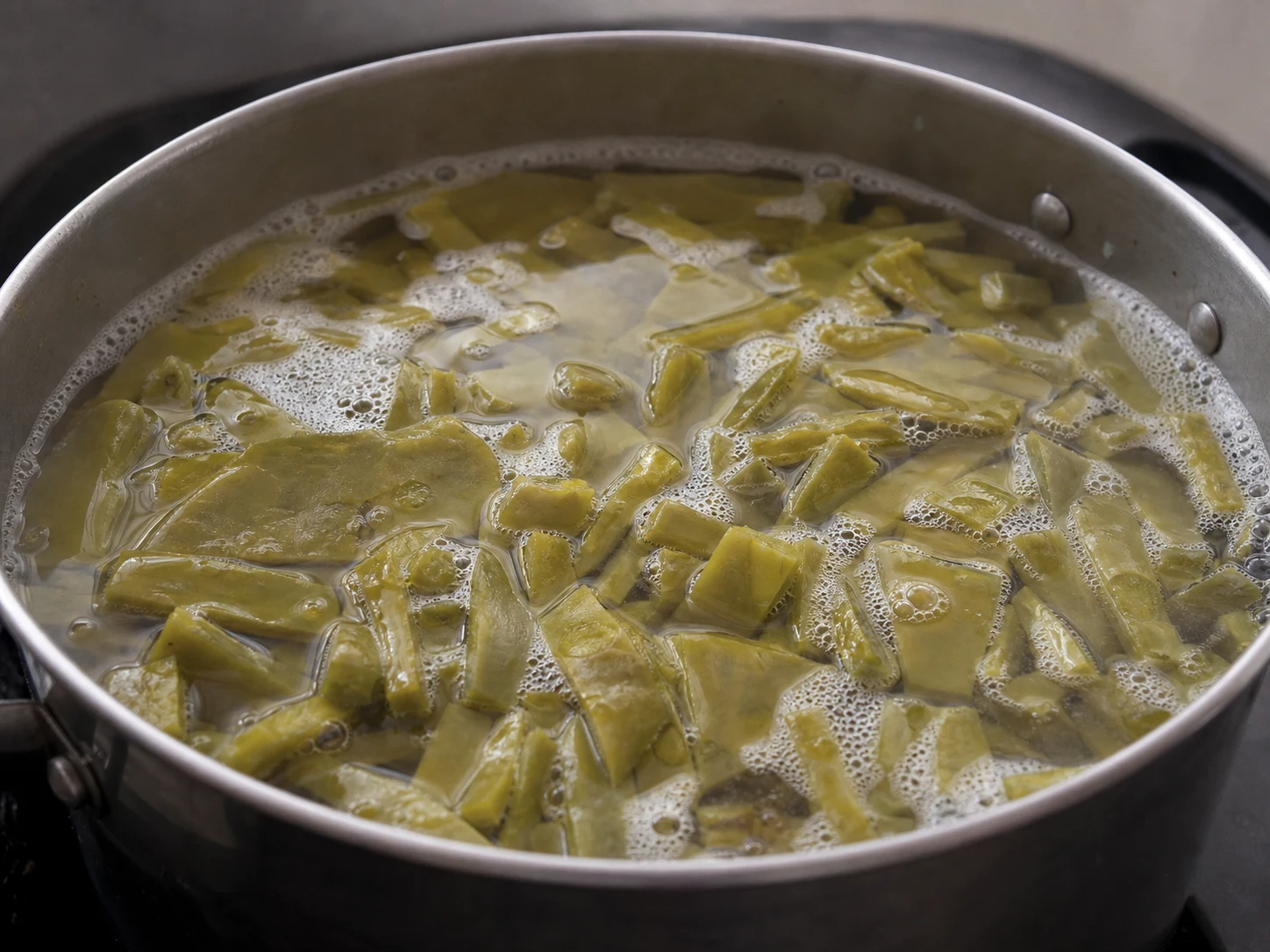
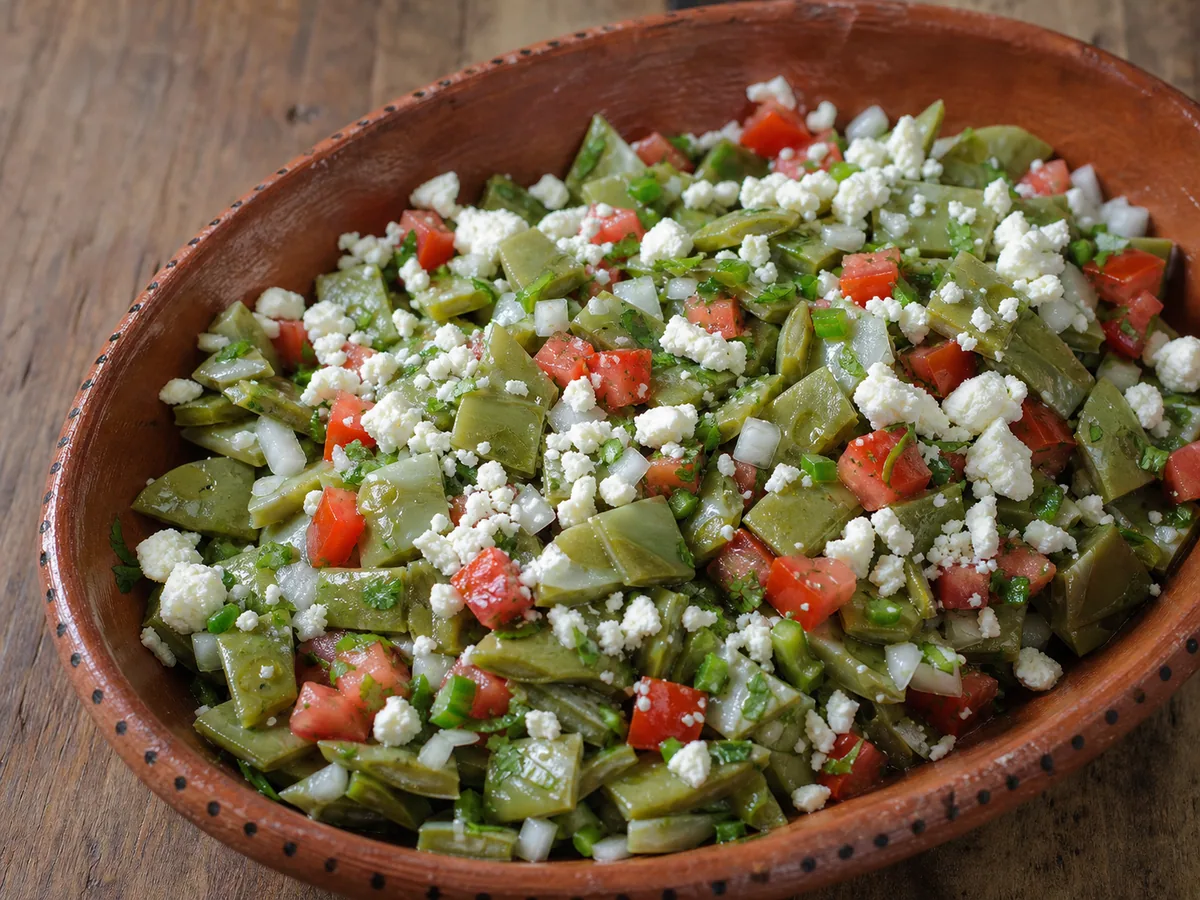
Transfer 600 g of fresh cactus paddles to a large saucepan after cutting them into bite-size pieces. Add enough water to cover them by 2.5 cm (1 in), leaving generous headroom, and keep the pan uncovered. Bring to a boil over medium-high heat, then reduce to a steady simmer. Cook for 8 to 10 minutes, starting the timer for the first check at 8 minutes. Watch the pan closely and lower the heat immediately if the mucilaginous foam rises toward the rim. The pieces are ready when they have changed from bright green to muted olive green and are tender with a slight bite rather than soft or collapsing.
08:00Rinse and drain thoroughly
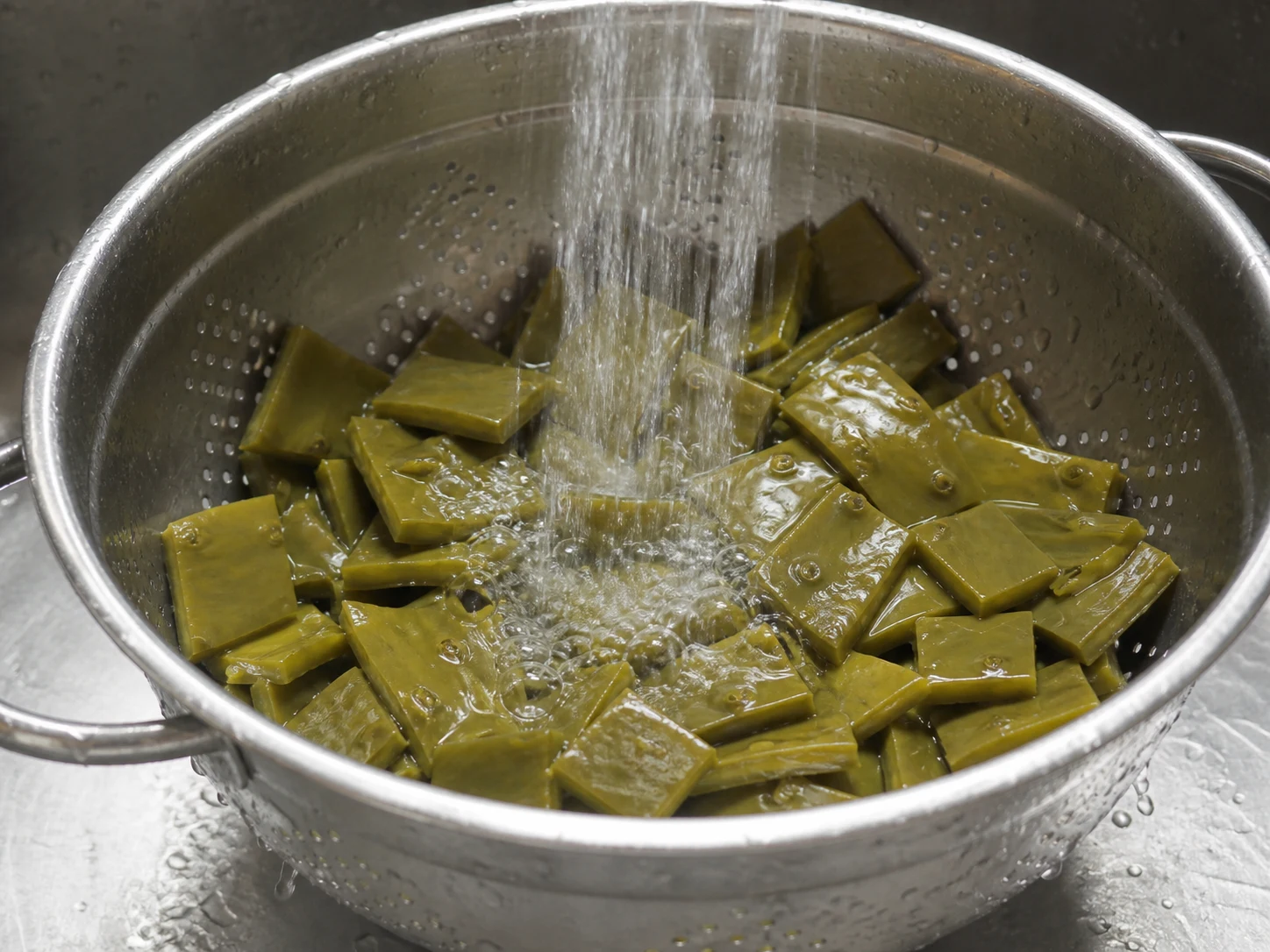
Pour 600 g of fresh cactus paddles into a colander after cooking. Rinse under cool running water, turning the pieces with a spoon, until the surface feels less slippery and the water runs mostly clear. Shake off excess water, spread the pieces in the colander, and let them drain for 10 minutes. Blot gently with a clean kitchen towel if water is still pooling underneath.
10:00Dress and finish the salad
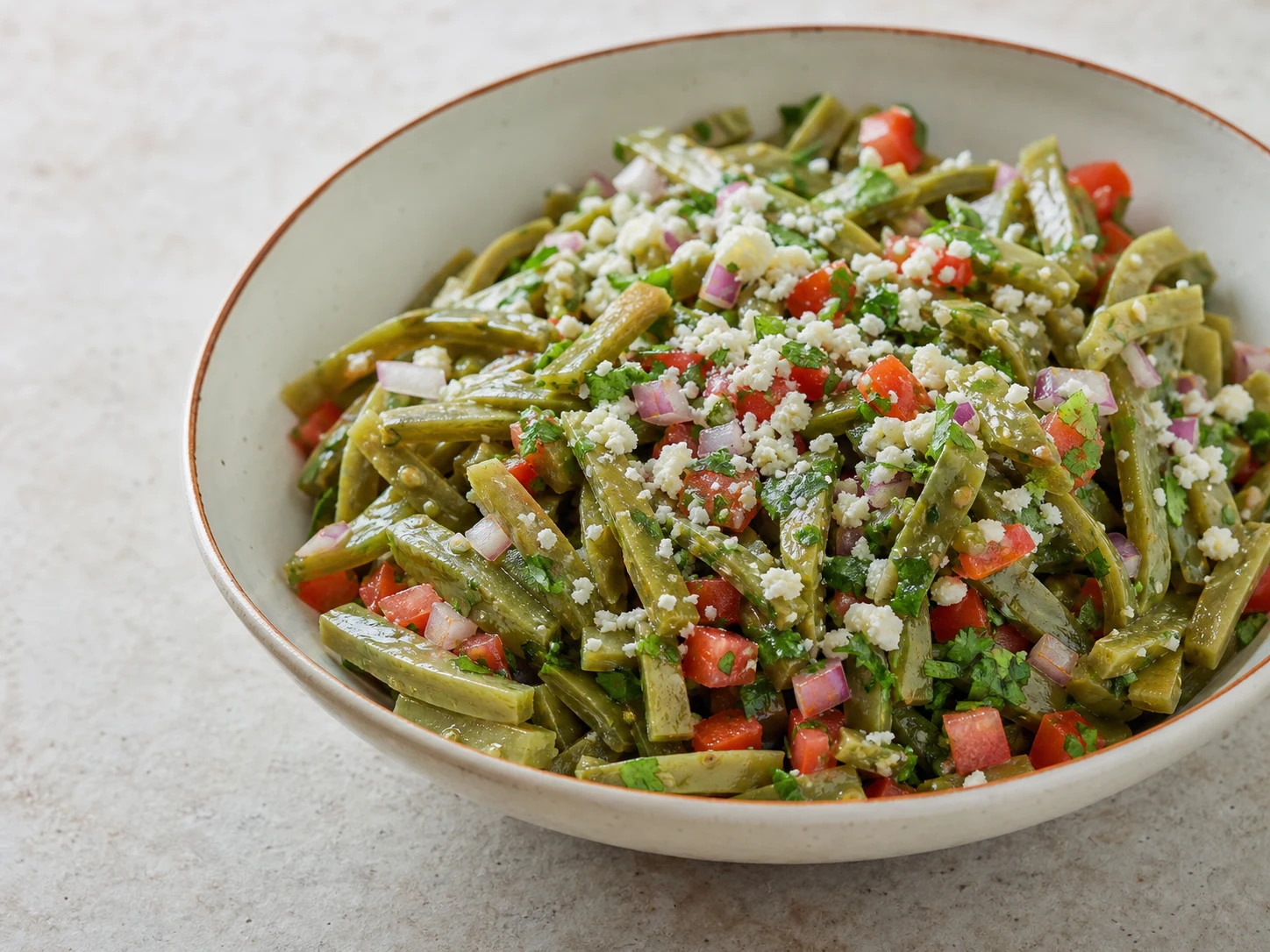
Whisk 45 ml of fresh lime juice, 30 ml of extra-virgin olive oil, 1 g of dried Mexican oregano, and 3 g of kosher salt in a large bowl until the dressing looks lightly emulsified. Add 600 g of fresh cactus paddles after draining, along with 300 g of ripe tomatoes, 90 g of white onion, 1 serrano chile, and 20 g of fresh cilantro, then fold gently until evenly coated. Taste and adjust the balance with a little more lime or salt only if needed. Crumble 100 g of pasteurized queso fresco over the salad and fold once or twice so some pieces stay distinct. Serve immediately at cool room temperature.


Smart Substitutions
- No fresh nopales? Use drained jarred nopalitos, rinse them well, and skip the simmering step.
- No queso fresco? Use commercially packaged, pasteurized queso panela, mild feta, or ricotta salata.
- Prefer less heat? Remove the serrano seeds and inner ribs, or replace the chile with a small amount of finely chopped poblano.
- No Mexican oregano? Use a smaller amount of Mediterranean oregano and add a little extra lime juice to keep the dressing bright.
Tips and Variations
- Choose young, firm cactus paddles; thick or heavily scarred paddles can be more fibrous.
- Drain the cooked nopales well so the dressing coats the salad instead of becoming diluted.
- Fold in the queso fresco at the end to keep visible crumbles and a clean contrast of textures.
What Went Wrong?
- Nopales are still very slippery Rinse them longer under cool running water, then give them the full draining time before dressing.
- Cactus is too soft Use a steadier but gentler simmer next time and begin checking at 8 minutes; the pieces should retain a slight bite.
- Salad tastes watery Drain the nopales and chopped tomatoes more thoroughly, then add a small splash of lime juice to restore the dressing.
- Salad tastes too salty Fold in more chopped tomato or cooked nopales and add lime juice; do not add more cheese until the balance is right.
Nutrition Estimate
- Fiber: 5 g per serving
- Sodium: 520 mg per serving
Nutrition disclaimer:This recipe is provided for general cooking information only. Nutrition values are estimates and may vary by ingredients, brands, preparation methods, and serving sizes. Check ingredient labels and follow appropriate food-safety practices. This content is not medical, dietary, allergy, or professional food-safety advice.
FAQ
Found an error or have a suggestion?
Help us improve this recipe. Send us your feedback and include the recipe name so we can take a look.