Method
Prepare the vegetables
Rinse 200 g of fresh spinach and 200 g of mung bean sprouts well and drain them separately. Cut 200 g of zucchini and 160 g of carrot into thin matchsticks. Slice 180 g of fresh shiitake mushrooms into 5 mm (1/4 in) pieces. Mince 3 garlic cloves and slice 3 scallions thinly.
Mix the sauce and vegetable seasoning
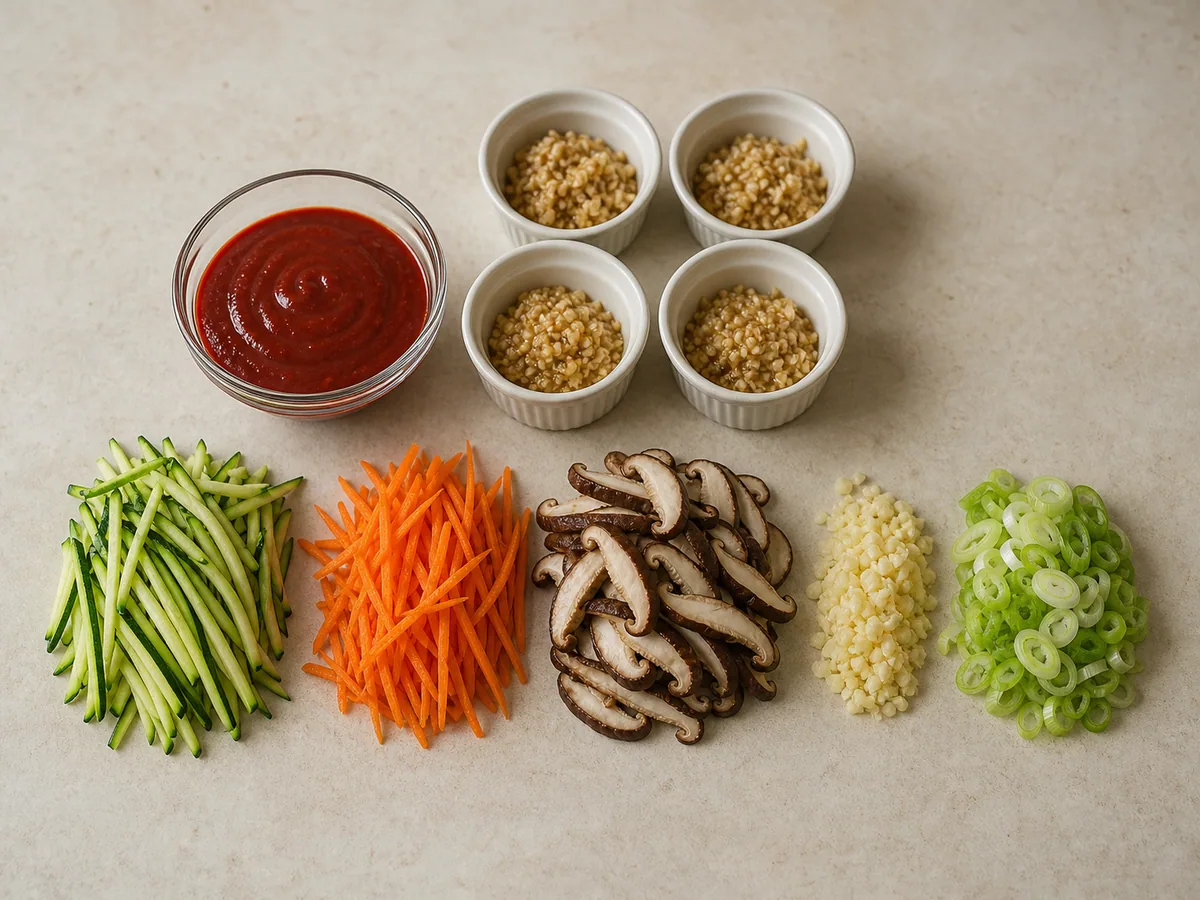
Whisk 45 g of gochujang, 10 ml of soy sauce for sauce, 10 ml of toasted sesame oil for sauce, 15 ml of rice vinegar, 12 g of light brown sugar, and 30 ml of water for sauce until smooth. In another bowl, stir 10 ml of soy sauce for vegetables, 10 ml of toasted sesame oil for vegetables, 3 garlic cloves, and 1 1/2 g of fine salt together. Divide the vegetable seasoning into five roughly equal portions: one each for the spinach, bean sprouts, zucchini, carrot, and shiitake.
Blanch and season the spinach
Bring a wide pot of water to a boil. Add 200 g of fresh spinach and press it under the water for 30 seconds, just until wilted. Lift it into a colander, rinse briefly under cool running water, squeeze firmly, and separate the strands. Toss with one reserved portion of the vegetable seasoning.
00:30Cook and season the bean sprouts
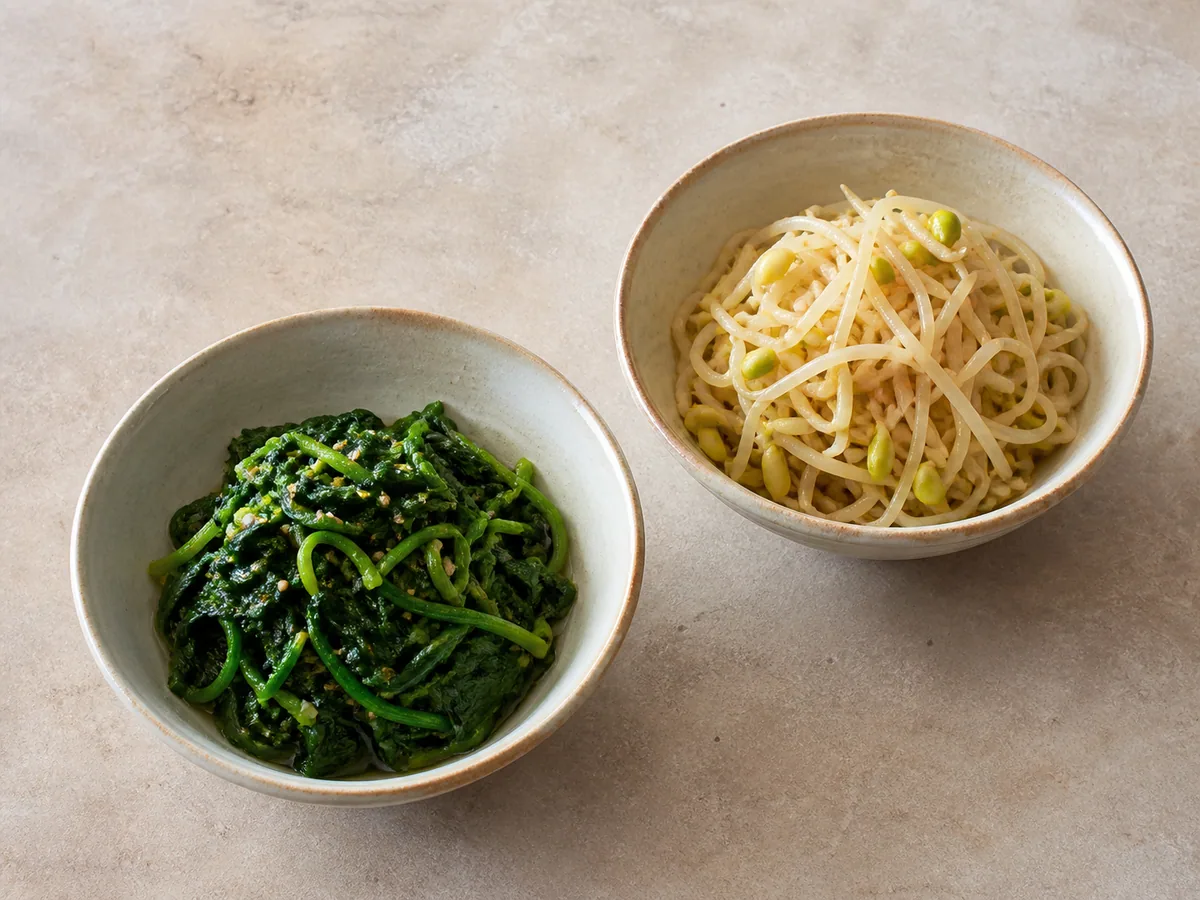
Return the water to a steady boil. Add 200 g of mung bean sprouts and cook for 4 minutes, stirring once or twice, until steaming hot throughout, fully cooked, and tender-crisp rather than raw-crisp. Drain thoroughly and toss with one reserved portion of the vegetable seasoning.
04:00Cook and season the zucchini
Heat a large skillet over medium-high heat. Pour 15 ml of neutral cooking oil for vegetables into a small cup, then add about one-third of the oil to the skillet. Add 200 g of zucchini and cook for 2 to 3 minutes, stirring often, until flexible but still bright. Transfer to a plate and toss while warm with one reserved portion of the vegetable seasoning.
02:00Cook and season the carrot
Return the skillet to medium-high heat and add half of the reserved oil. Add 160 g of carrot and cook for 2 to 3 minutes, stirring often, until slightly softened but not limp. Transfer to the plate in a separate pile and toss while warm with one reserved portion of the vegetable seasoning.
02:00Cook and season the shiitake
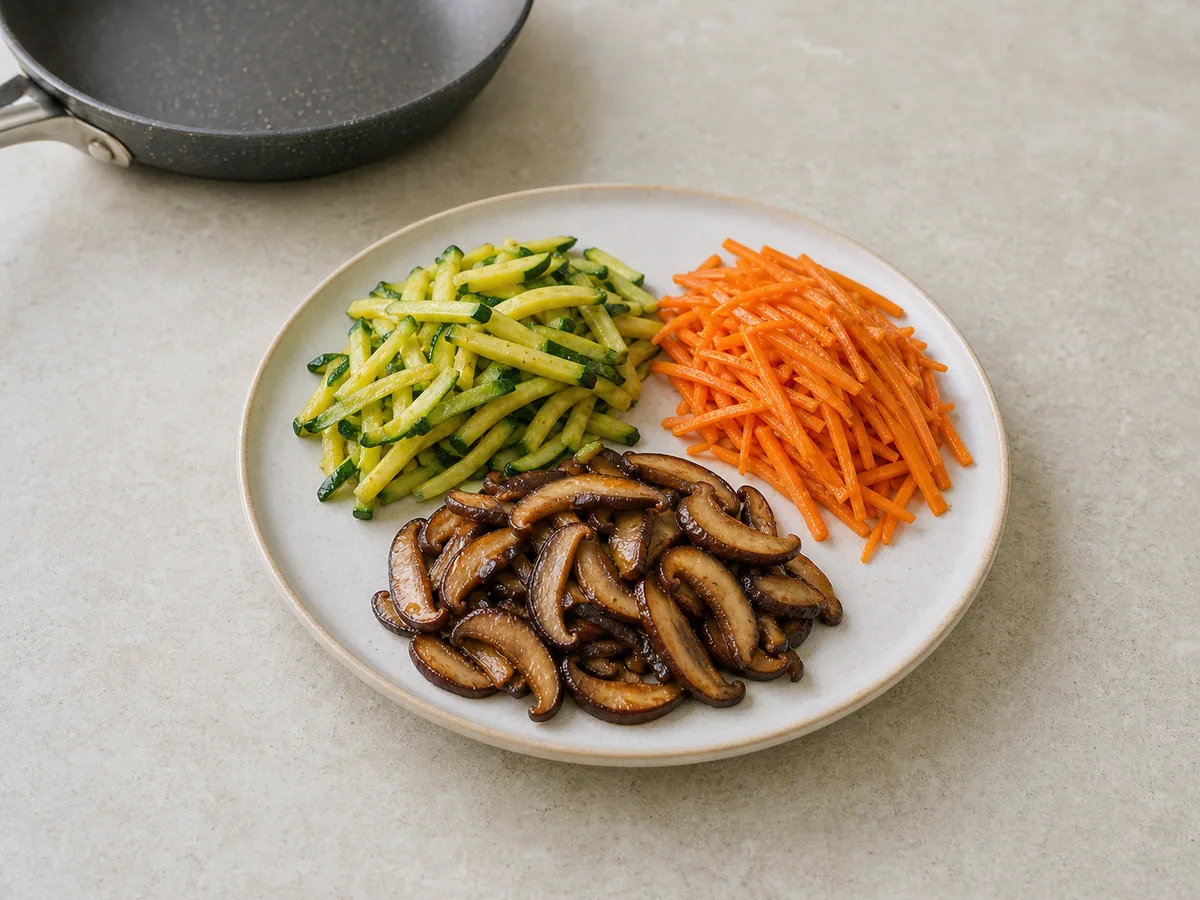
Add the remaining reserved oil to the skillet, then add 180 g of fresh shiitake mushrooms. Cook for 4 to 5 minutes, stirring occasionally, until tender and browned at the edges. Transfer to the plate in a third separate pile and toss while warm with the final portion of the vegetable seasoning.
04:00Cook the eggs through

Return the skillet to medium heat and add 10 ml of neutral cooking oil for eggs. Crack 4 large eggs into the pan, leaving space between them. Wash your hands and clean any surface touched by raw egg. Cover and cook for 4 to 6 minutes, until the whites and yolks are completely firm and opaque. Use a food thermometer to verify that the center of the yolks reaches 71°C (160°F). Start checking when the timer ends.
04:00Build and mix the bibimbap
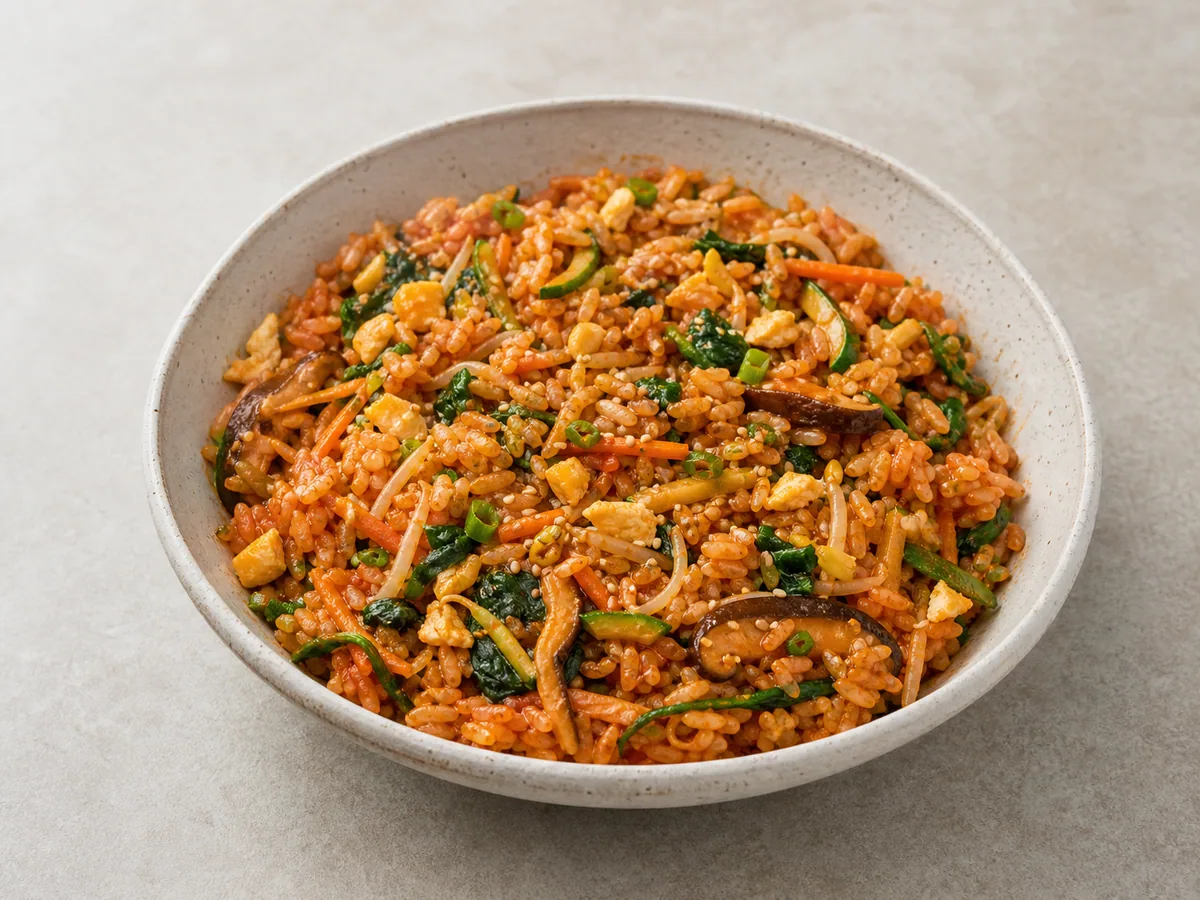
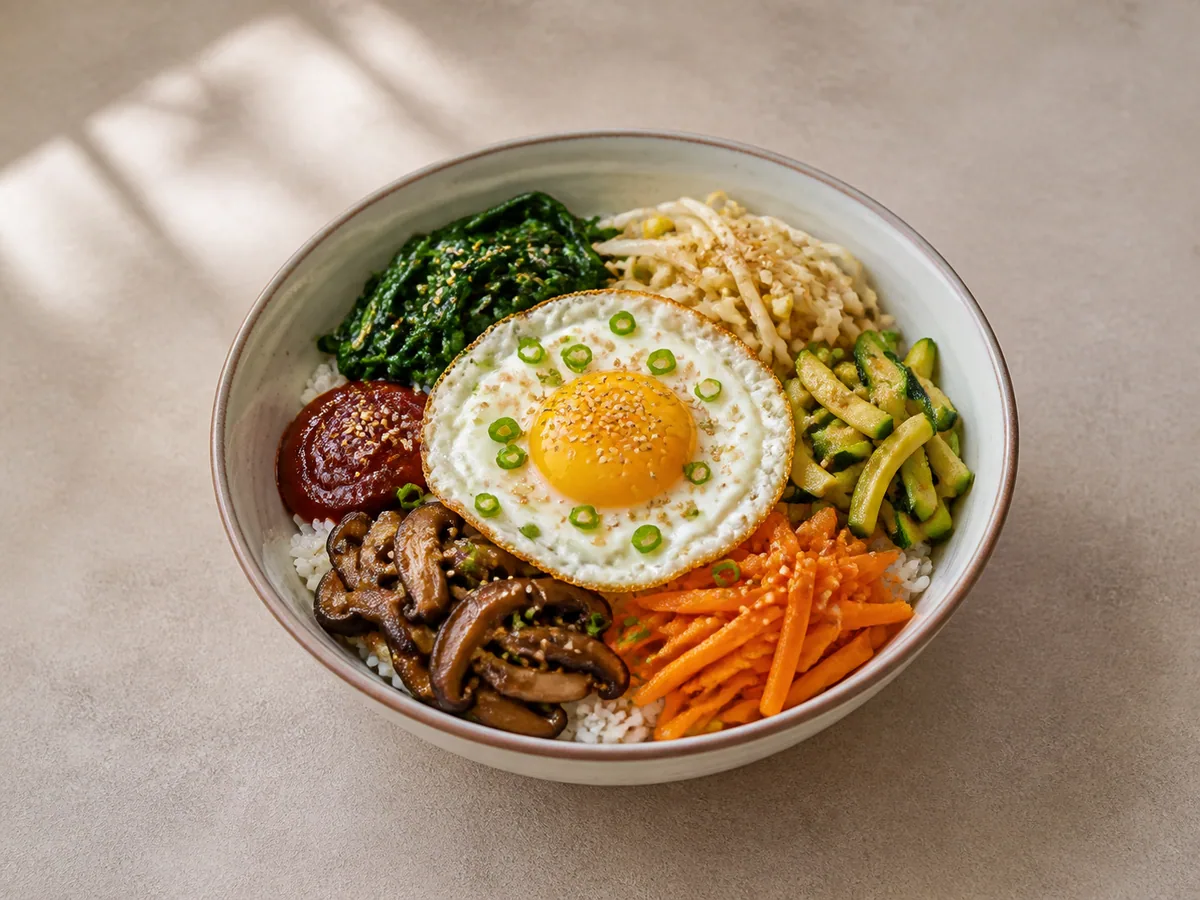
Divide 720 g of cooked short-grain white rice among serving bowls. Arrange the prepared vegetables in separate sections over the rice and place one fully cooked egg on each bowl. Spoon the gochujang sauce over the center, starting lightly so each person can control the heat. Finish with 12 g of toasted sesame seeds and 3 scallions. Serve immediately and mix the rice, toppings, egg, and sauce thoroughly before eating.


Smart Substitutions
- No shiitake mushrooms? Use cremini mushrooms or king oyster mushrooms and cook them until well browned.
- No mung bean sprouts? Use finely shredded cabbage and saute it briefly so it stays crisp.
- Prefer less heat? Use half as much gochujang and loosen the sauce with a little extra water.
- Skipping eggs? Top each bowl with browned firm tofu for a plant-based protein option.
Tips and Variations
- Drain and squeeze the blanched vegetables thoroughly so they season cleanly instead of watering down the bowl.
- Cook the skillet vegetables in separate batches; crowding them traps steam and dulls their color.
- Taste the sauce before serving because gochujang brands vary in salt, sweetness, and heat.
What Went Wrong?
- The bowl turns watery Drain the sprouts well, squeeze the spinach firmly, and avoid crowding the skillet vegetables.
- The toppings taste flat Season each vegetable while it is still warm so the soy-sesame mixture coats it evenly.
- The sauce is too thick Stir in a small splash of water until it falls from a spoon in a slow ribbon.
- The vegetables are soft and pale Raise the skillet heat slightly and cook in smaller batches so moisture evaporates quickly.
Nutrition Estimate
- Fiber: 6 g per serving
- Sodium: 840 mg per serving
Nutrition disclaimer:This recipe is provided for general cooking information only. Nutrition values are estimates and may vary by ingredients, brands, preparation methods, and serving sizes. Check ingredient labels and follow appropriate food-safety practices. This content is not medical, dietary, allergy, or professional food-safety advice.
FAQ
Found an error or have a suggestion?
Help us improve this recipe. Send us your feedback and include the recipe name so we can take a look.