Method
Mix and knead the dough
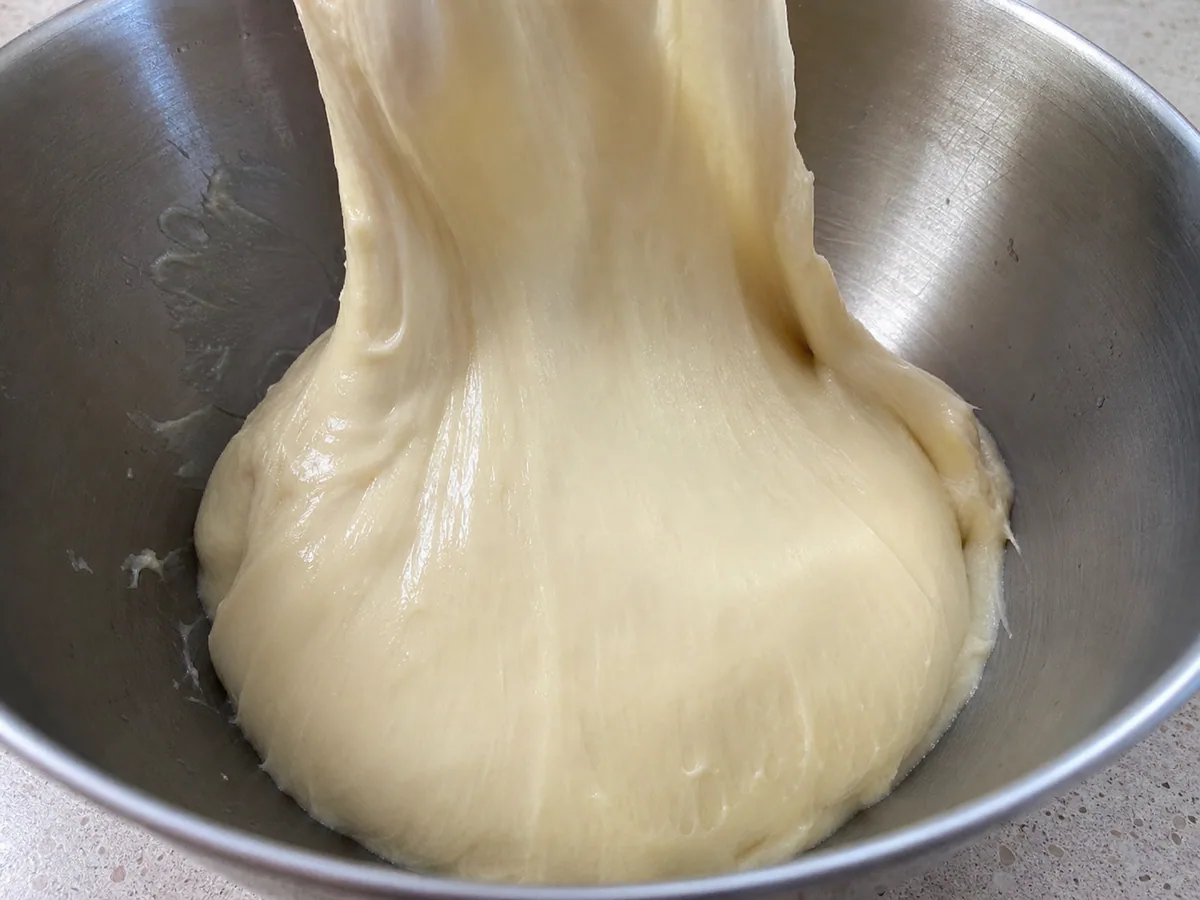
Warm 120 ml of whole milk for dough to 38–43°C (100–110°F). Cut 60 g of unsalted butter for dough into small pieces and let it soften. Combine 300 g of all-purpose flour, 50 g of granulated sugar for dough, 7 g of instant yeast, and 3 g of fine salt for dough in a large mixing bowl. Add 120 ml of whole milk for dough and 1 large egg, then mix until no dry flour remains. Knead by hand or with a dough hook, adding 60 g of unsalted butter for dough gradually, for about 8 minutes total. Continue until the dough is glossy, elastic, and able to stretch into a thin translucent sheet without tearing.
08:00Let the dough rise
Shape the dough into a ball, place it back in the bowl, and cover with a clean towel. Let it rise in a warm, draft-free place until nearly doubled and visibly airy, 50 to 70 minutes. Start checking at 50 minutes; the dough should keep a shallow indentation when pressed gently with one fingertip.
50:00Cook the vanilla custard
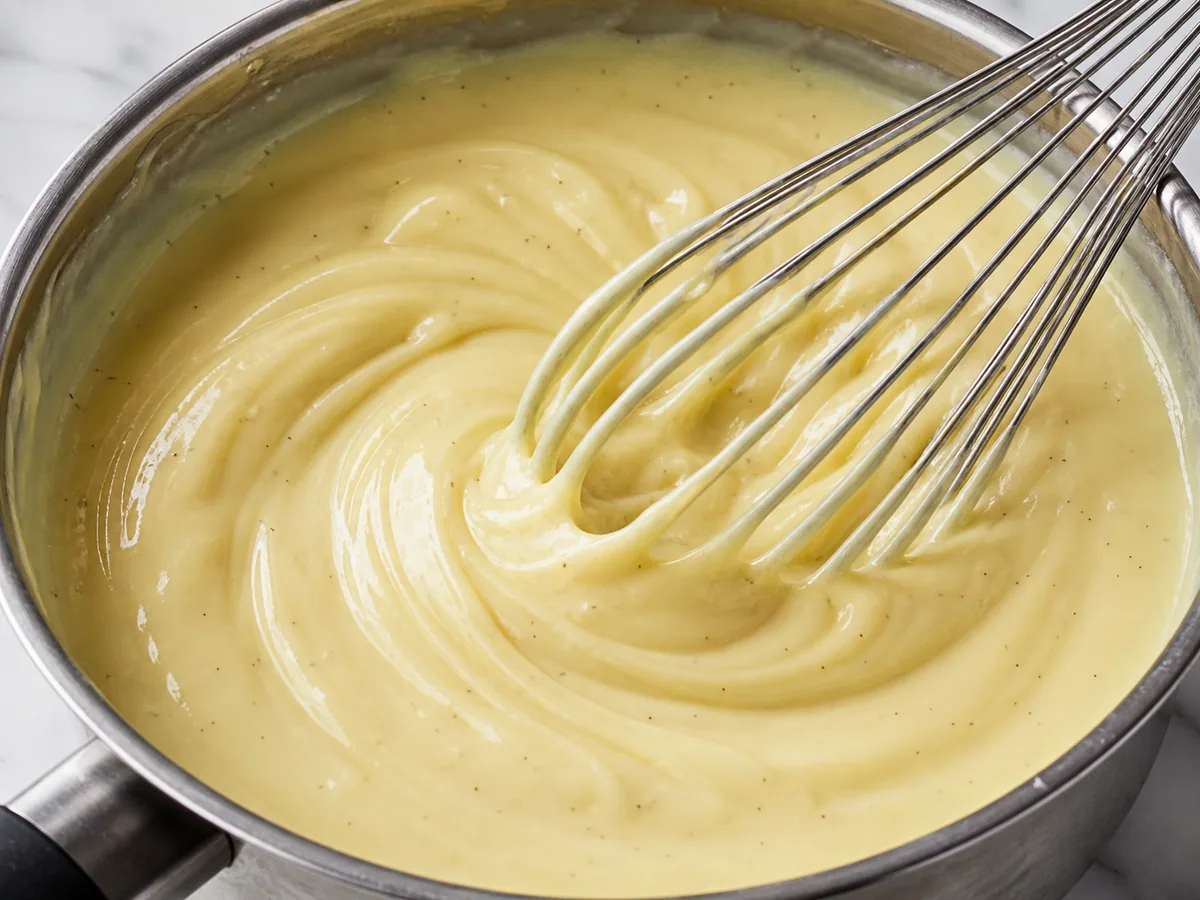
Split 1 vanilla bean lengthwise and scrape the seeds into a medium saucepan. Add the pod and 480 ml of whole milk for filling, then heat over medium until steaming and small bubbles appear around the edge. In a heatproof bowl, whisk 100 g of granulated sugar for filling, 4 large egg yolks, and 35 g of cornstarch until smooth. Pour in about one-third of the hot milk mixture while whisking, then return everything to the saucepan. Cook over medium heat, whisking constantly and reaching into the corners, until the custard is thick, glossy, and registers at least 71°C (160°F) on a food thermometer. Remove the vanilla pod and whisk in 40 g of unsalted butter for filling. Transfer the custard to a clean heatproof bowl, set that bowl in a larger bowl of ice water, and stir occasionally until the custard reaches cool room temperature and holds soft ridges.
Make the honey-almond topping
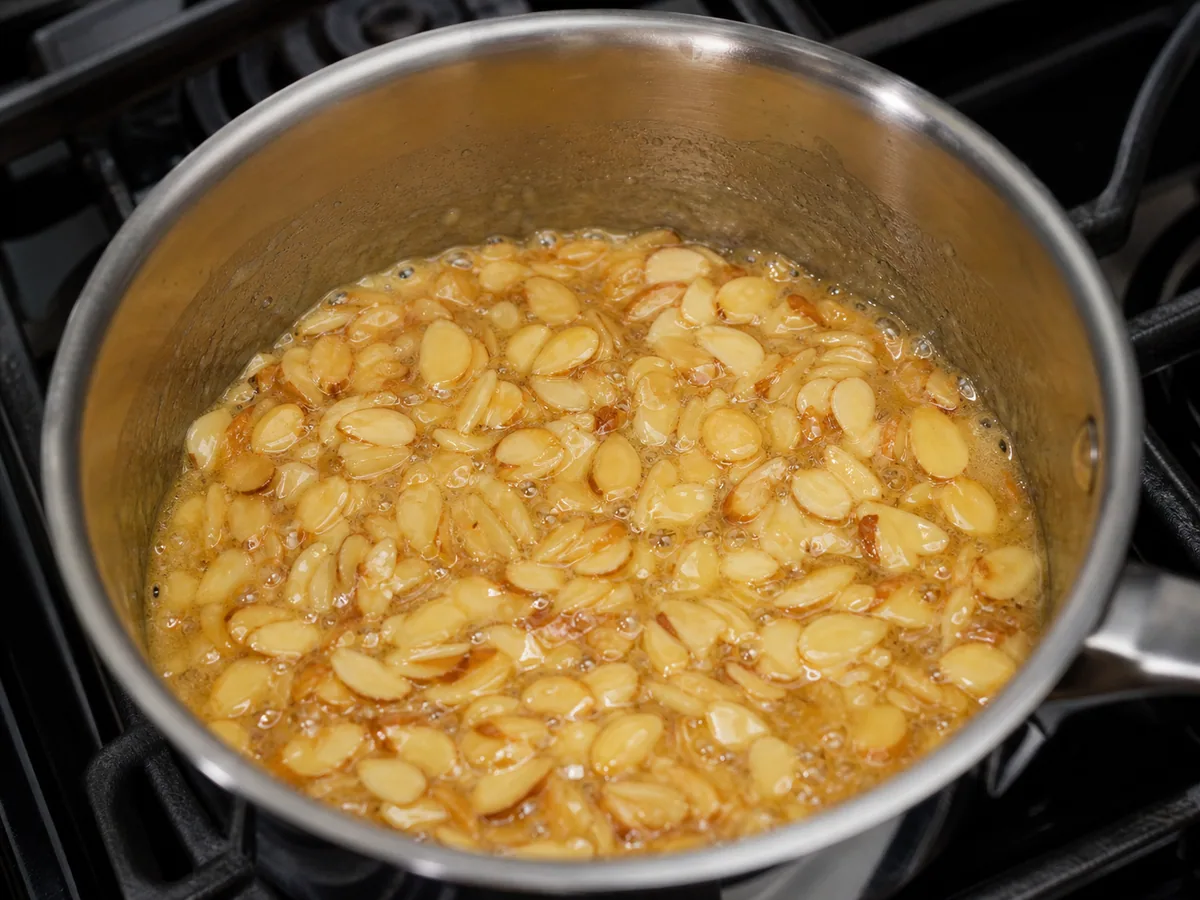
Combine 85 g of unsalted butter for topping, 50 g of granulated sugar for topping, 60 g of honey, 45 ml of heavy cream, and 1 g of fine salt for topping in a small saucepan over medium heat. Stir until the butter is fully melted and the mixture bubbles evenly around the edge. Fold in 100 g of sliced almonds and cook for about 2 minutes, stirring, until every slice is glossy and the syrup briefly parts when a spatula crosses the pan. Remove from the heat and keep the topping ready to spread while warm.
02:00Shape, top, and proof the cake
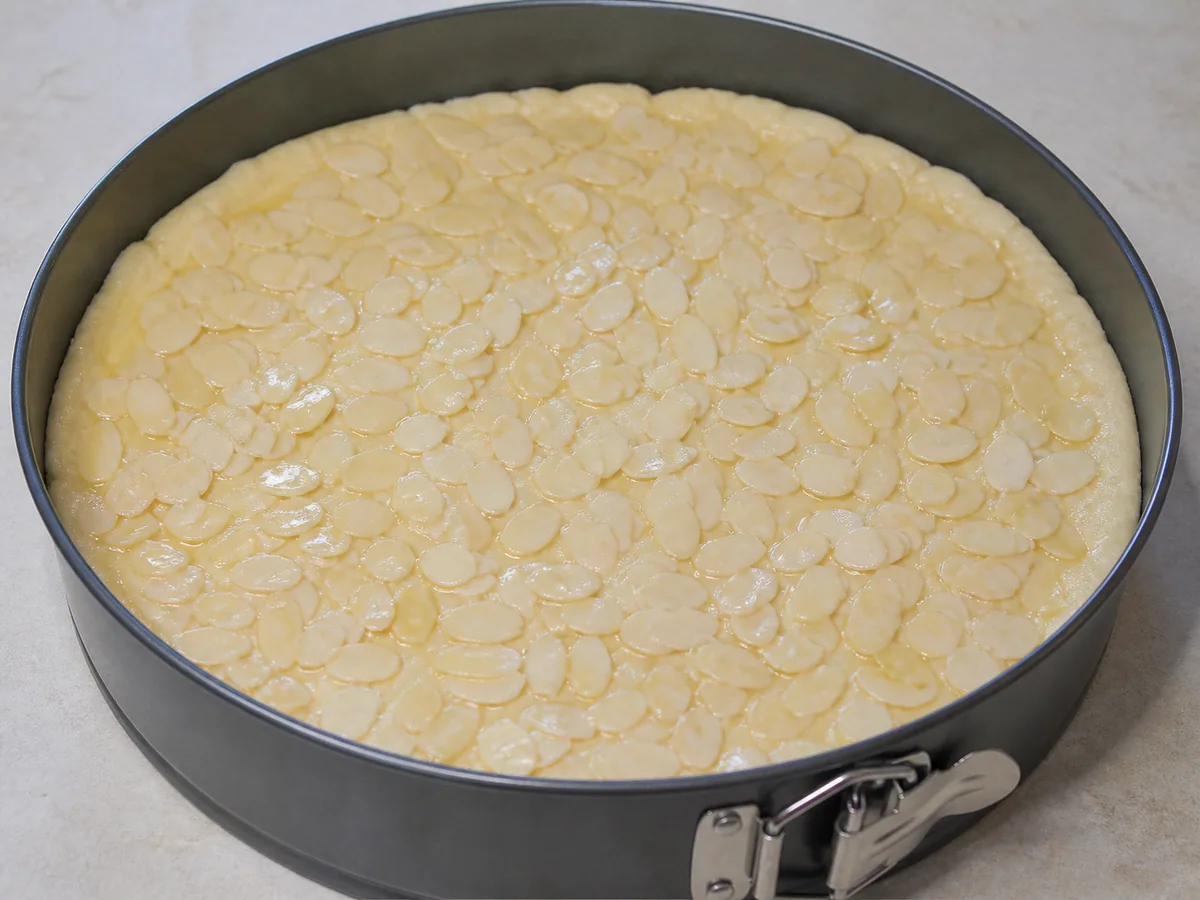
Line the base of a 23 cm (9 in) springform pan (for 8 servings) with parchment. For a scaled batch, choose a pan that keeps the dough at a similar depth rather than scaling the diameter directly. Press the risen dough into an even layer, working it all the way to the edge. Spoon the warm almond mixture over the dough and spread it gently without pressing out the air. Heat the oven to 180°C (350°F). Let the topped dough stand until puffy and slightly domed, 25 to 35 minutes, checking first at 25 minutes.
25:00Bake until deeply golden
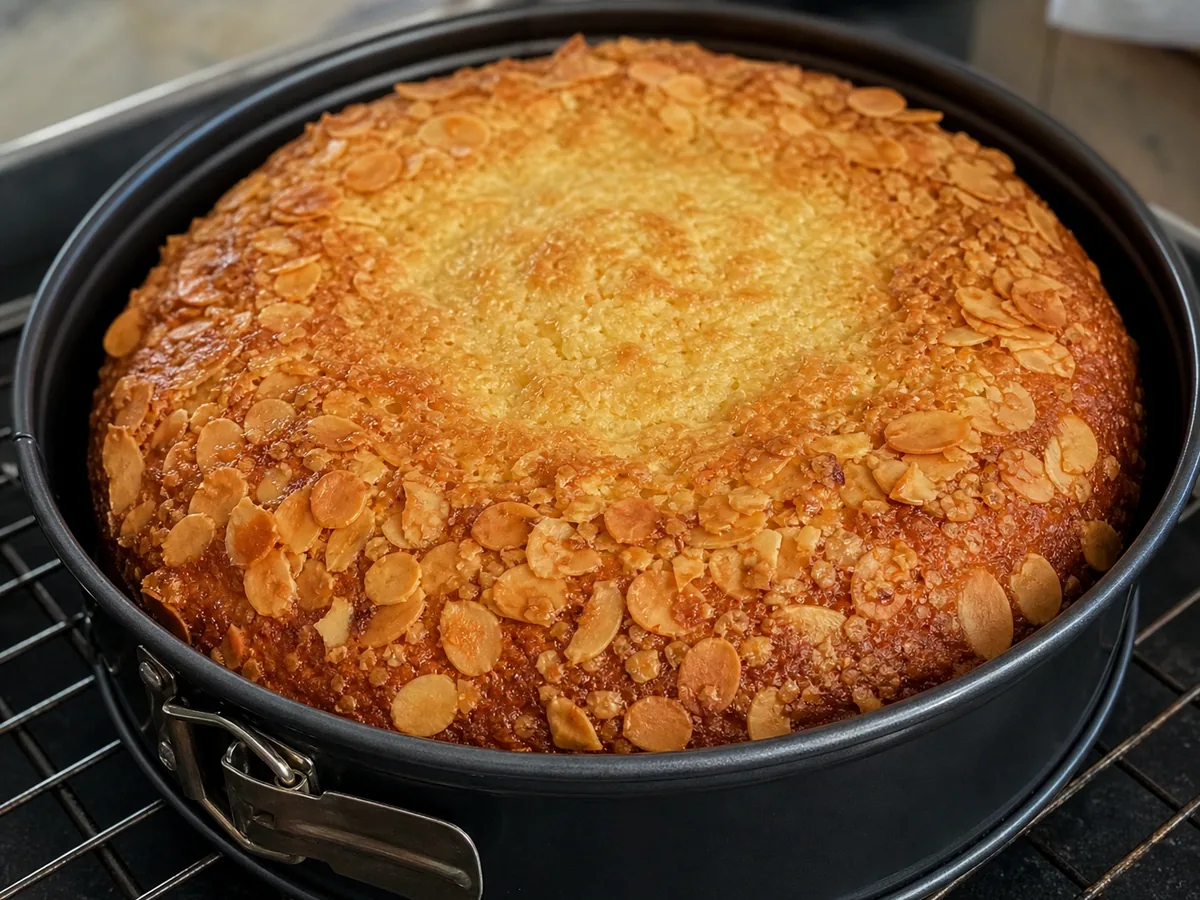
Bake on the middle rack until the almond crown is deep golden, the center springs back when lightly touched, and a food thermometer inserted into the center of the cake crumb registers about 93°C (200°F), 24 to 28 minutes. Start checking at 24 minutes. If the almonds darken too quickly before the center is done, lay a loose sheet of foil over the pan without pressing it onto the topping.
24:00Cool the cake completely
Set the pan on a rack for 15 minutes. Run a thin knife around the edge where any caramel has attached, release the springform ring, and slide the cake onto the rack. Leave it for about 30 minutes more, or until the crumb and almond crown are completely at room temperature, before cutting; assembling while warm can soften the filling and crack the top unevenly.
15:00Split, fill, and assemble
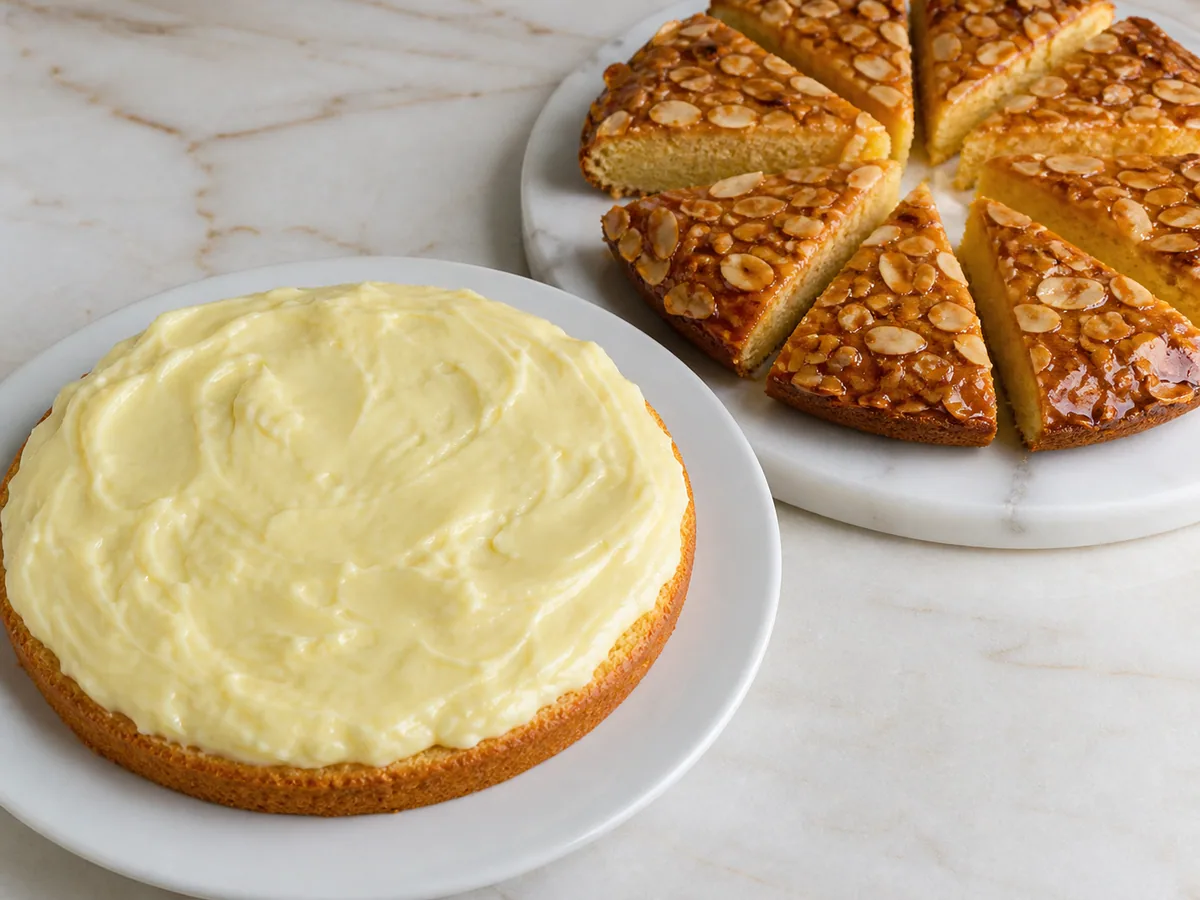
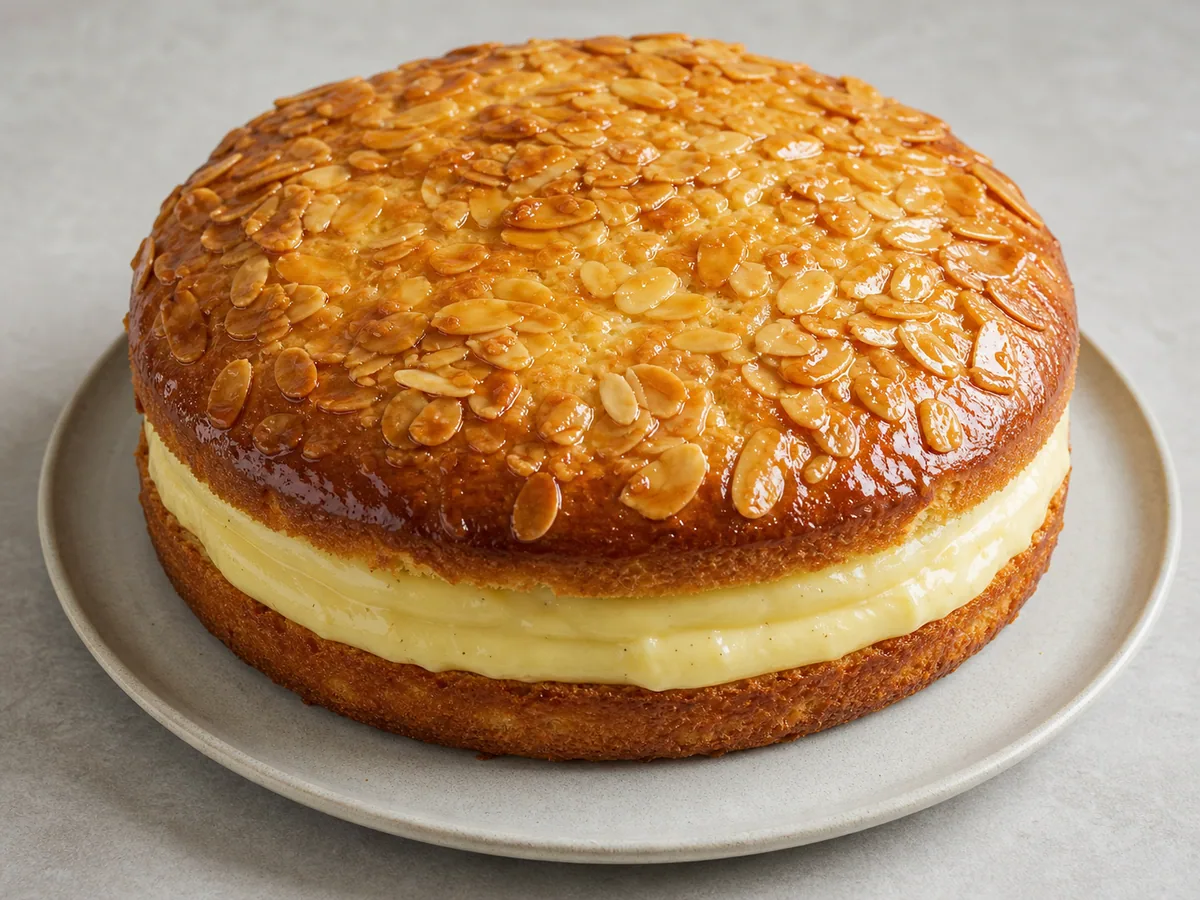
Use a long serrated knife to cut the cake horizontally into two even layers. Lift the almond-topped half onto a board and cut it into one wedge per serving—8 wedges for the default batch—before assembly so the crisp crown will not crush the filling later. Whisk the cooled custard briefly until smooth, then spread it evenly over the bottom cake layer, stopping just short of the edge. Arrange the almond-topped wedges over the custard in their original circle. Cut between the wedges and serve.


Smart Substitutions
- No vanilla bean? Use 2 teaspoons alcohol-free vanilla flavoring, stirred in with the filling butter, or replace 2 tablespoons of the filling sugar with 2 tablespoons vanilla sugar.
- No instant yeast? Use 7 g (2 1/4 teaspoons) active dry yeast and dissolve it in the warm dough milk before mixing.
- No heavy cream? Use 3 tablespoons (45 ml) whole milk in the almond topping; the glaze will be slightly less rich but will still caramelize.
- Prefer a softer nut layer? Use 100 g (1 cup) slivered almonds and cook the topping only until cohesive, without letting the syrup deepen in color.
Tips and Variations
- Weigh the flour when possible; too much flour makes the yeast cake tight instead of feathery.
- Spread the almond mixture while it is warm and fluid so the dough stays airy beneath it.
- Saw gently through the baked almond crown with a serrated knife rather than pressing straight down.
What Went Wrong?
- Dough is not rising Move it to a warmer draft-free spot and allow more time. If there is still no activity, the yeast may be inactive or the milk may have been too hot.
- Custard is lumpy Whisk firmly while it is still hot, then press it through a fine sieve before adding the butter.
- Almond topping slides toward the edge Let the syrup thicken until a spatula leaves a brief trail, then spread it with a light touch over dough that is puffy but not overproofed.
- Filling squeezes out when sliced Make sure both cake and custard are at cool room temperature, and pre-cut the almond-topped half into wedges before assembly.
Nutrition Estimate
- Fiber: 3 g per serving
- Sodium: 250 mg per serving
Nutrition disclaimer:This recipe is provided for general cooking information only. Nutrition values are estimates and may vary by ingredients, brands, preparation methods, and serving sizes. Check ingredient labels and follow appropriate food-safety practices. This content is not medical, dietary, allergy, or professional food-safety advice.
FAQ
Found an error or have a suggestion?
Help us improve this recipe. Send us your feedback and include the recipe name so we can take a look.