Method
Prepare the tofu and aromatics
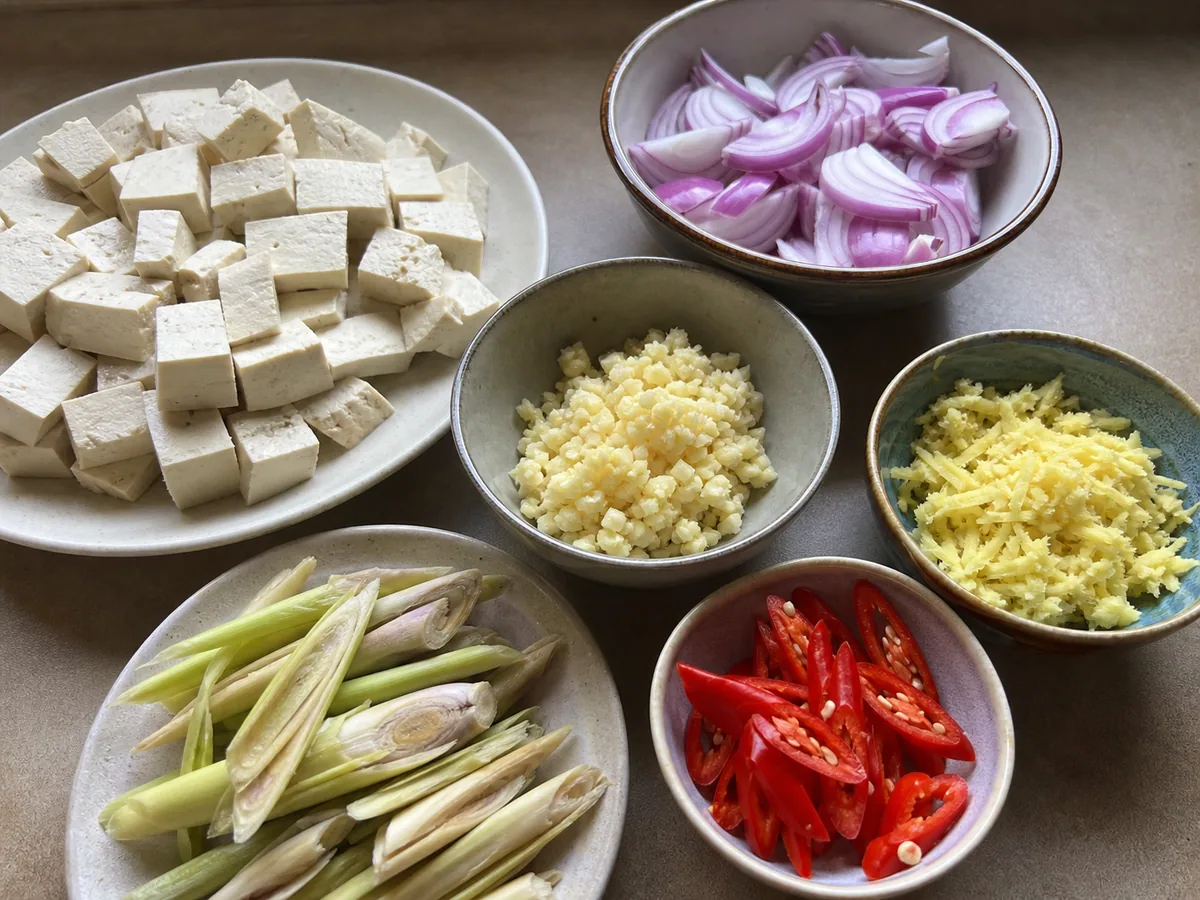
Pat 400 g of extra-firm tofu dry and cut it into 2.5 cm (1 in) cubes. Slice 150 g of yellow onion, mince 20 g of garlic cloves, peel and grate 40 g of fresh ginger, bruise 30 g of lemongrass stalks with the flat side of a knife, and thinly slice 8 g of red Thai chiles. Keep the chiles separate so you can add less for a milder pot.
Brown the tofu
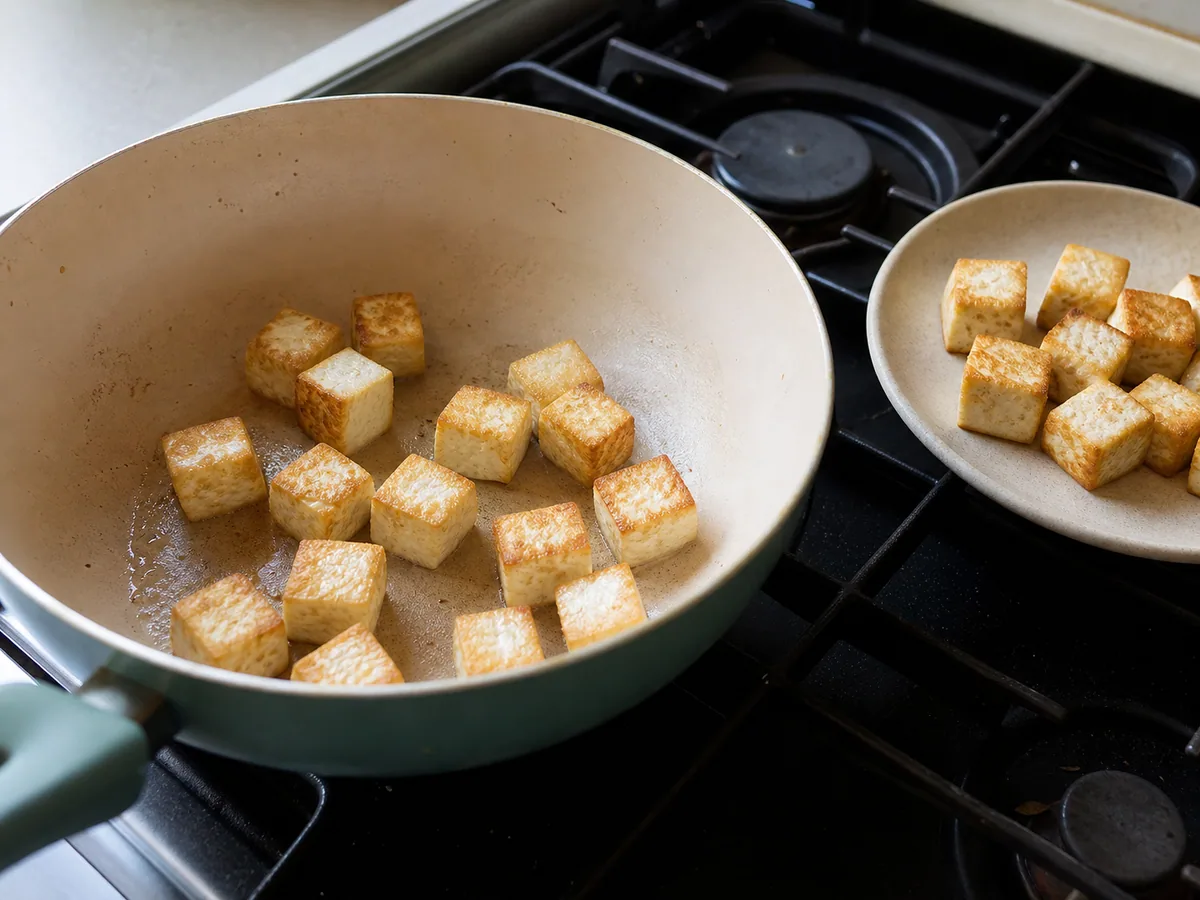
Heat 15 ml of coconut oil for tofu in a wide, heavy pot over medium-high heat. Add 400 g of extra-firm tofu in one layer and cook for 8 to 10 minutes, turning every few minutes, until several sides are golden and the cubes release easily from the pot. Transfer the tofu to a plate; it will finish cooking in the sauce later.
08:00 first checkBuild the aromatic base
Reduce the heat to medium and add 15 ml of coconut oil for aromatics. Add 150 g of yellow onion and cook for 4 to 5 minutes, with the timer marking the first check, until softened but not browned. Stir in 20 g of garlic cloves, 40 g of fresh ginger, 30 g of lemongrass stalks, and 8 g of red Thai chiles; cook for 1 to 2 minutes, stirring constantly, until the ginger and lemongrass smell fragrant and the garlic is softened without browning.
04:00 first checkCook the taro leaves in coconut sauce
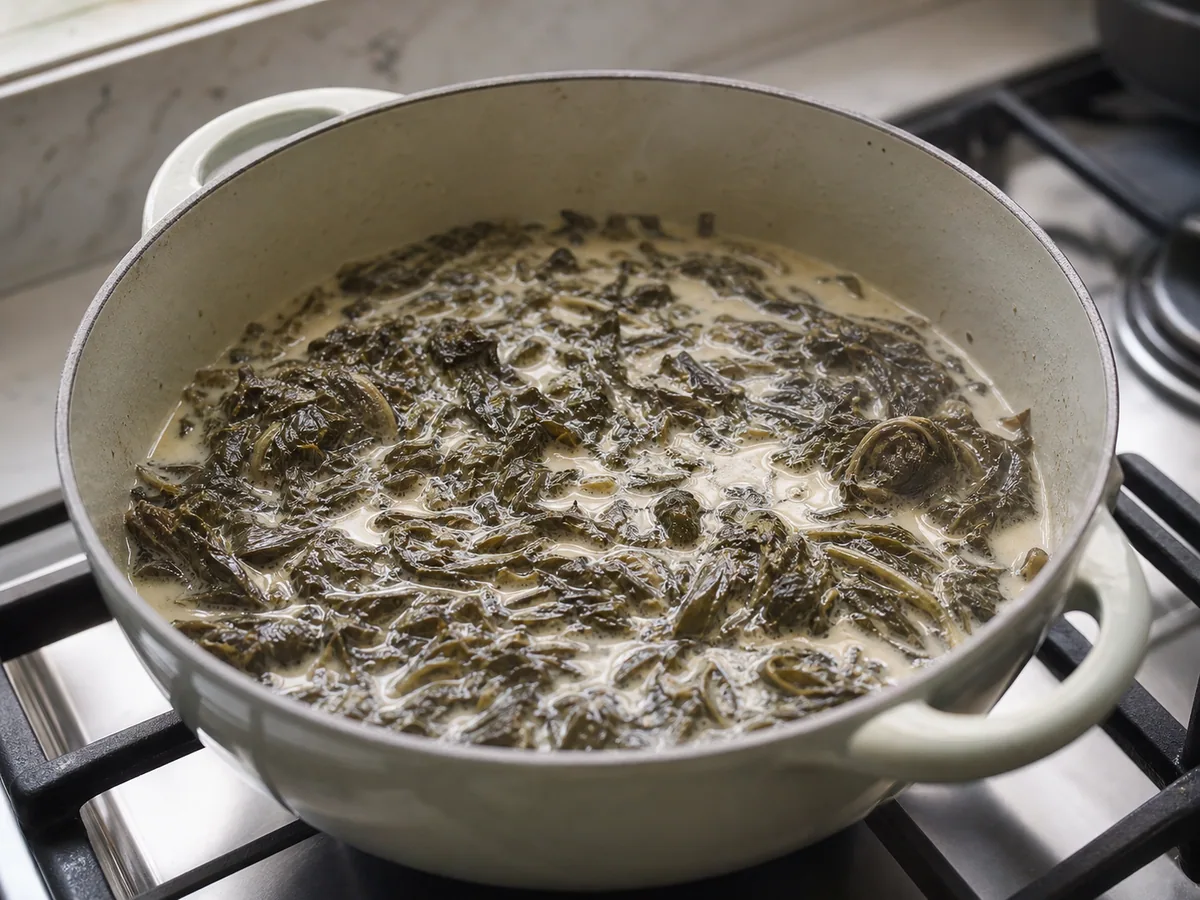
Pour in 480 ml of full-fat coconut milk and 360 ml of water, then stir in 30 ml of low-sodium soy sauce. Whisk 34 g of white miso with a ladleful of the warm coconut liquid in a small bowl, then stir it back into the pot. Bring the mixture to a gentle simmer, allowing about 6 to 8 minutes depending on the pot and burner. Inspect 50 g of dried taro leaves and discard any unidentified plant pieces, then add the leaves in loose handfuls. Press them into the liquid as they soften, but avoid vigorous stirring at first. Simmer partially covered over low heat for 40 to 45 minutes, with the timer marking the first check, folding gently only after the leaves have softened. Do not taste the leaves before this stage. Continue until no dry patches remain and the leaves are completely tender.
40:00 first checkFinish the laing with tofu
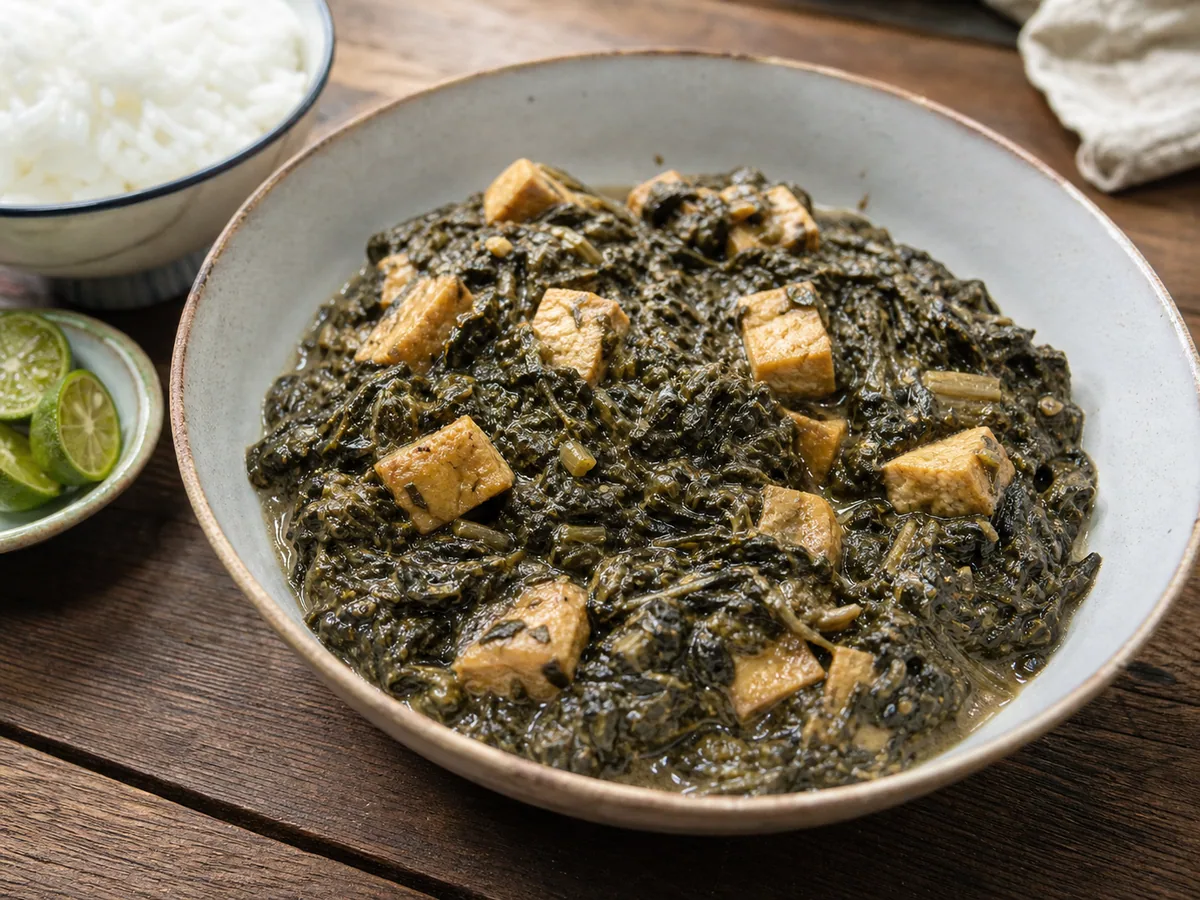
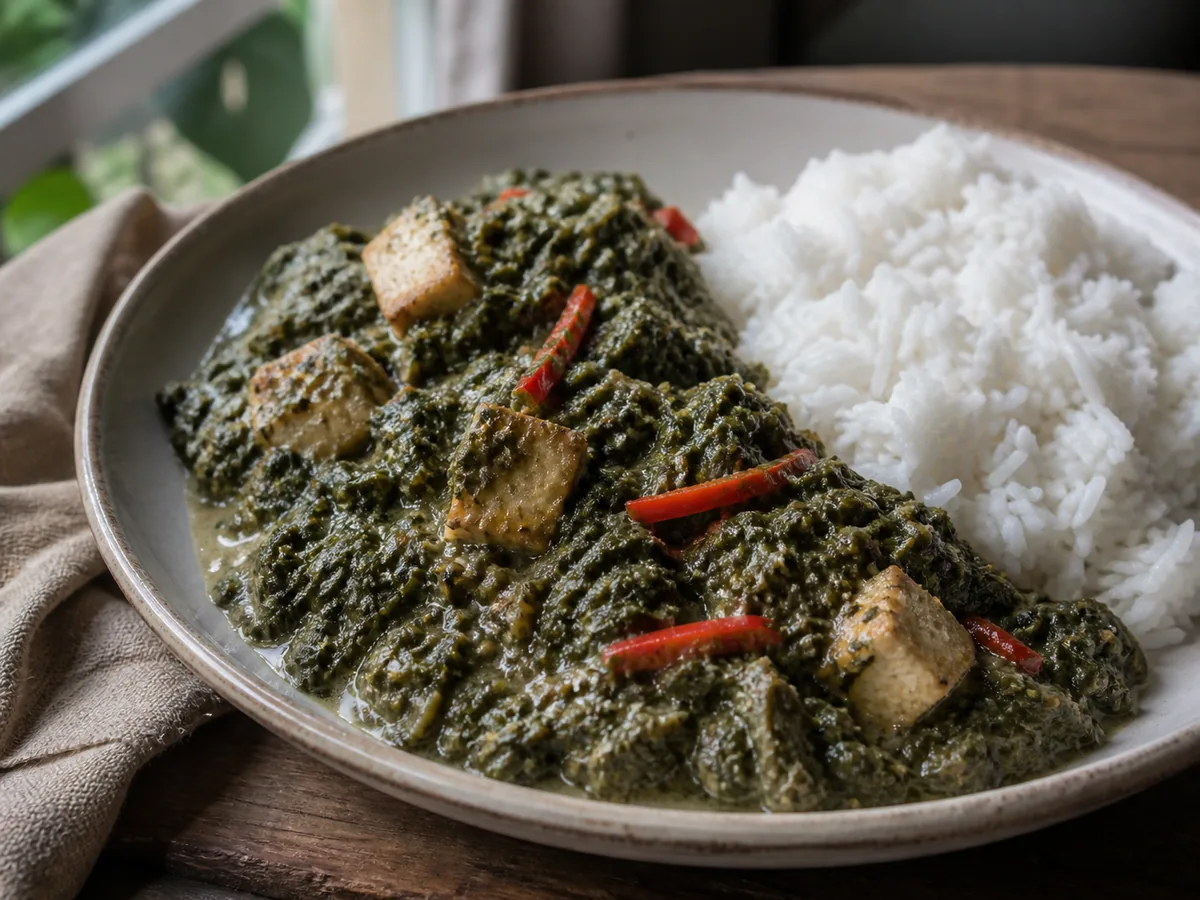
Fold 400 g of extra-firm tofu and 1 g of black pepper into the tender taro leaves. Simmer uncovered for 8 to 10 minutes, with the timer marking the first check, until the sauce clings to the leaves and tofu and small beads of coconut oil appear at the surface. Remove the lemongrass. Taste only after the leaves are fully tender; if you notice any prickly or irritating sensation, do not serve yet and continue simmering with hot water as needed until it is gone. Serve with steamed jasmine rice (optional) and calamansi wedges (optional).
08:00 first check


Smart Substitutions
- No dried taro leaves? For 4 servings, use 500 g (about 1 lb 2 oz) young edible fresh taro leaves from a reliable food supplier, with the thick veins and stems removed. Wash thoroughly, slice, and begin with 1/2 cup (120 ml) water instead of the full amount, adding hot water only as needed. Cook until completely soft and non-irritating; never taste the leaves raw or partly cooked.
- No white miso? Use mushroom-based bagoong for a more Filipino-style fermented note, or season gradually with additional low-sodium soy sauce.
- No lemongrass? Use about one wide strip of lime zest for every 2 servings, and remove the strips before serving.
- No extra-firm tofu? Firm tofu works, but brown it gently and fold it into the sauce with less stirring.
Tips and Variations
- Buy packaged dried taro leaves from a reliable Filipino or Asian grocer and inspect them before cooking.
- Keep the simmer gentle. High heat can scorch the coconut solids before the leaves have time to soften.
- Brown the tofu in roomy batches when scaling up so the cubes sear instead of steaming.
What Went Wrong?
- Leaves feel prickly or irritating Do not serve them. Add a little hot water and continue simmering until the leaves are completely soft and the sensation is gone.
- Sauce is too thin Simmer uncovered over low heat, stirring gently, until the coconut sauce coats the leaves.
- Sauce catches on the bottom Lower the heat immediately, move the unscorched mixture to a clean pot, and add a small splash of hot water.
- Tofu is breaking apart Stop stirring and fold from the bottom with a wide spoon only once or twice during the final simmer.
Nutrition Estimate
- Fiber: 6 g per serving
- Sodium: 610 mg per serving
Nutrition disclaimer:This recipe is provided for general cooking information only. Nutrition values are estimates and may vary by ingredients, brands, preparation methods, and serving sizes. Check ingredient labels and follow appropriate food-safety practices. This content is not medical, dietary, allergy, or professional food-safety advice.
FAQ
Found an error or have a suggestion?
Help us improve this recipe. Send us your feedback and include the recipe name so we can take a look.